


Adults at average risk should begin colorectal cancer screening at age 45, even if they feel healthy. People with a family history or other elevated-risk conditions may need to start earlier.
Screening supports early detection by finding cancer or precancerous growths before symptoms appear. Your starting age, test choice, and follow-up schedule depend on your risk and previous results.
Key takeaways
Routine screening generally covers ages 45 to 75. Stool tests offer an at-home option, while colonoscopy can detect and remove polyps. An abnormal screening result needs follow-up, and symptoms need medical evaluation regardless of age.
When to start and stop colorectal cancer screening
Average-risk adults usually start at 45
Average risk generally means no personal history of cancer of the colon or rectum, precancerous polyps, inflammatory bowel disease, or an inherited colorectal cancer syndrome.
The USPSTF colorectal cancer screening recommendations support screening between ages 45 and 75. Between 76 and 85, the decision depends on overall health, previous screening, life expectancy, and preferences. Screening stops after 85.
These are widely used US recommendations; UAE screening pathways can differ.
Higher risk can mean starting earlier
Tell your doctor if a parent, sibling, or child had colorectal cancer or an advanced polyp. Their age at diagnosis and the number of affected relatives matter.
A personal history of polyps or cancer also changes the schedule. So can longstanding ulcerative colitis, Crohn's disease affecting the colon, Lynch syndrome, or familial adenomatous polyposis. These risk factors need an individualized plan rather than the routine starting age.
How screening options differ
These intervals generally apply to average-risk adults with normal results.
<table><thead><tr><th>Test</th><th>Repeat interval</th><th>What to expect</th></tr></thead><tbody><tr><td>Colonoscopy</td><td>Every 10 years if no precancerous changes are found</td><td>Examines the whole colon and allows polyp removal.</td></tr><tr><td>FIT or guaiac FOBT</td><td>Every year</td><td>At-home stool tests that look for hidden blood.</td></tr><tr><td>Cologuard</td><td>Every 3 years</td><td>Prescription stool DNA test; the kit arrives by mail with a prepaid return label.</td></tr><tr><td>Flexible sigmoidoscopy</td><td>Every 5 years under some schedules</td><td>Examines the final two feet of the roughly six-foot colon.</td></tr><tr><td>CT colonography</td><td>Every 5 years</td><td>Imaging with bowel preparation; sometimes used after an incomplete colonoscopy.</td></tr><tr><td>Shield blood test</td><td>No FDA-set repeat interval</td><td>Detects cancer signals but isn't reliable for detecting precancerous polyps.</td></tr></tbody></table>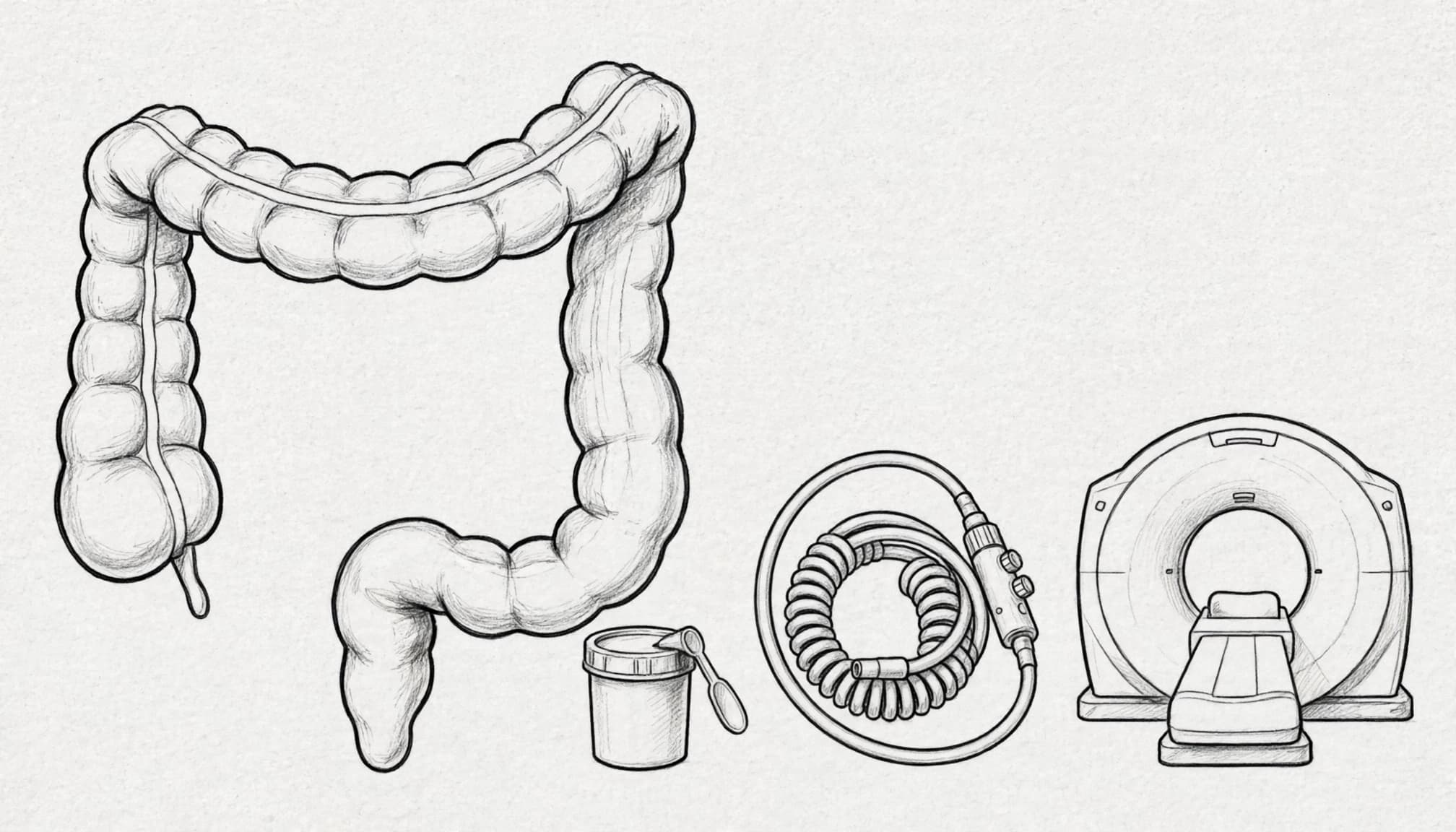
A screening colonoscopy suits people who want a whole-colon examination and polyp removal during one procedure. Annual FIT suits people who can commit to testing and follow-up. A positive FIT result should lead to the recommended colonoscopy.
Sigmoidoscopy schedules vary. The American Gastroenterological Association describes five-year testing alongside negative annual stool tests; USPSTF also lists ten-year sigmoidoscopy plus annual FIT.
The FDA approved Shield in 2024. However, the National Cancer Institute's blood-test explanation highlights its limited ability to detect precancerous growths.
Preparation depends on your test
Colonoscopy and CT colonography need bowel preparation
Colonoscopy bowel prep includes clear liquids and laxatives the day before, following the prescribed schedule. Some regimens split laxative doses between the evening and procedure morning.
Because sedation affects alertness, arrange someone to drive you home. Don't drive or work that day. CT colonography requires similar bowel preparation, although it usually doesn't require sedation.
Stool-test instructions aren't interchangeable
FIT generally needs no dietary restrictions. Unlike FIT, guaiac FOBT can be affected by foods and medicines. Some FOBT kits may require avoiding cauliflower, cabbage, horseradish, radishes, turnips, red meat, vitamin C, iron-rich foods, aspirin, and NSAIDs for two days.
Don't stop prescribed medicines without medical advice. Follow the instructions for your particular kit, because requirements differ.
The AGA test preparation guide explains these differences. Cologuard requires collecting and returning a stool sample rather than bowel-cleansing preparation.
What happens after a positive result
A positive stool test means blood or abnormal markers were detected. It doesn't establish a cancer diagnosis. Completing the recommended colonoscopy helps with early detection.
-
Arrange the recommended colonoscopy rather than repeating the stool test to dismiss the result.
-
Complete bowel preparation so the clinician can examine the colon properly.
-
Review any biopsy or polyp results and receive your next screening or surveillance schedule.
Blood tests and imaging also need colonoscopy after an abnormal result.
A 2023 Dubai screening study offers a snapshot of local screening rates. It reported that 9% of 36,126 eligible adults underwent screening. Among those screened, 11.6% tested positive, but only 54.9% of referred patients completed colonoscopy. Of completed colonoscopies, 13.1% found cancer and 41% found polyps.
Healthy habits support screening
Exercise, avoiding tobacco, limiting alcohol, and maintaining a healthy weight can reduce risk, but they don't replace screening.
The FDA's screening guidance cites research associating regular exercise with 24% lower colorectal cancer risk. It also reports associations with higher risk: 41% for three or more alcoholic drinks daily, 18% for smoking, and 45% for obesity in women. These are study estimates, not individual predictions.
The FDA also notes rising colorectal cancer rates among adults under 50 and higher incidence and mortality among Black Americans than other US racial groups.
Common screening questions
Does routine stool analysis count as cancer screening?
Our routine stool analysis and gut infection tests investigate digestive problems, but they aren't a form of colon cancer screening and don't replace a dedicated FOBT kit, FIT, or stool DNA test.
Our guidance on regular health checkups supports preventive care and screening for cancer appropriate to age.
What if I already have symptoms?
Rectal bleeding (blood in the stool), persistent bowel changes, unexplained weight loss, or iron-deficiency anemia need medical evaluation at any age. This is diagnostic assessment, not routine screening.
Don't wait until 45 or rely on a negative home test when symptoms persist.
Choose a schedule you can complete
Average-risk adults usually begin colorectal cancer screening at 45. Family history and certain medical conditions can mean starting earlier.
Choose a suitable test with your clinician, then complete its repeat schedule and any follow-up. Screening works best when an abnormal result leads to the next necessary examination.