


A complete blood count (CBC) checks red blood cells, white blood cells, and platelets, including measurements of their size and hemoglobin content. It helps your doctor investigate symptoms, assess general health, or monitor treatment, but it doesn't diagnose a condition on its own.
If your report has a high or low flag, its meaning depends on the result and your health history. Start with what each measurement describes.
Key Takeaways
-
A CBC checks oxygen-carrying cells, infection-fighting cells, and platelets that help stop bleeding.
-
A differential adds a breakdown of white blood cell types.
-
Your laboratory's reference ranges and clinical context guide interpretation.
What a Complete Blood Count Measures
Red blood cells and their measurements
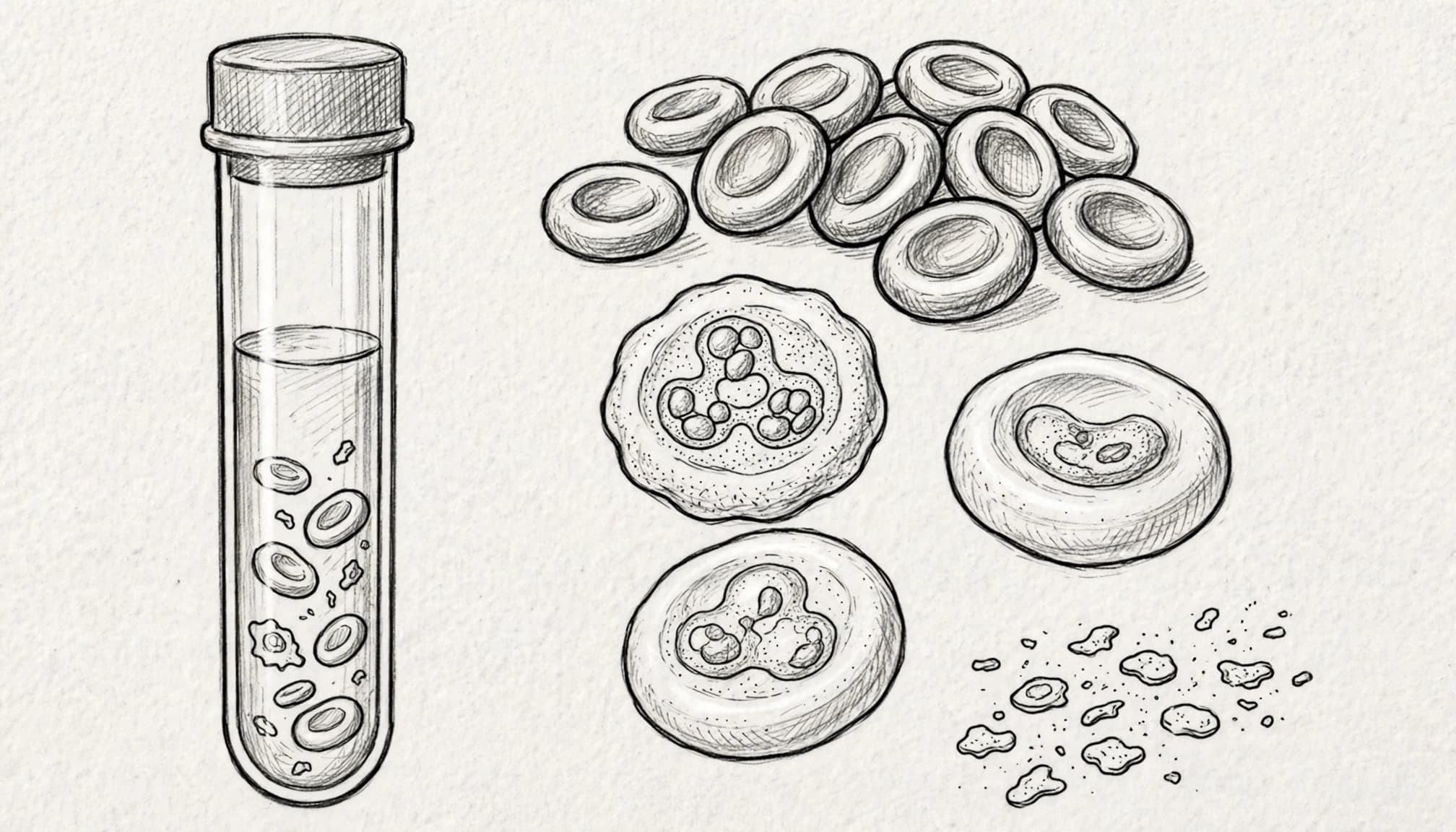
The complete blood count measures red blood cells, which carry oxygen. The red blood cell count measures their number, while hemoglobin measures the oxygen-carrying protein inside them. Hematocrit, also called HCT, is the percentage of blood made up of red blood cells.
Red cell indices provide more detail. Mean corpuscular volume (MCV) measures average cell size. MCH describes the average amount of hemoglobin per cell, while MCHC describes its concentration inside red cells.
Red cell distribution width (RDW) describes how much cell sizes vary. Together, these measurements help your doctor assess patterns associated with anemia.
White blood cells, platelets, and the differential
White blood cells support immune defense, while platelets help form clots. The platelet count measures their number, and mean platelet volume describes their average size.
A CBC with differential measures five types of white blood cells: neutrophils, lymphocytes, monocytes, eosinophils, and basophils. Results appear as percentages, absolute counts, or both.
Typical adult proportions are roughly 50% to 70% neutrophils and 20% to 50% lymphocytes, although ranges vary.
An absolute count equals the white blood cell count multiplied by that cell type's percentage. For example, 30% lymphocytes with a total count of 10,000 per microliter equals 3,000 lymphocytes per microliter.
Adult CBC Reference Ranges
These adult CBC reference ranges are published by Mayo Clinic.
<table><thead><tr><th>Measurement</th><th>Male adults</th><th>Female adults</th></tr></thead><tbody><tr><td>Red blood cell count</td><td>4.35 to 5.65 trillion/L</td><td>3.92 to 5.13 trillion/L</td></tr><tr><td>Hemoglobin</td><td>13.2 to 16.6 g/dL</td><td>11.6 to 15 g/dL</td></tr><tr><td>Hematocrit</td><td>38.3% to 48.6%</td><td>35.5% to 44.9%</td></tr><tr><td>White blood cells</td><td>3.4 to 9.6 billion/L</td><td>3.4 to 9.6 billion/L</td></tr><tr><td>Platelet count</td><td>135 to 317 billion/L</td><td>157 to 371 billion/L</td></tr></tbody></table>Use the reference range printed on your report. Laboratories use different methods and limits, so the normal range can vary. Children have age-specific ranges, and pregnancy can change expected results.
Units can also look different without changing the value. For red cells, trillion/L equals million/µL. For white cells and platelets, billion/L equals thousands/µL, often written as ×10³/µL.
Compare the result, its unit, and the laboratory's range together before interpreting a high or low flag.
What High or Low CBC Results Can Mean
Changes in red cells and hemoglobin
Low red cells, hemoglobin, or hematocrit can indicate an anemia pattern. Possible causes include blood loss, iron deficiency, vitamin deficiencies, or chronic illness.
When anemia is present, low MCV suggests a microcytic pattern, meaning smaller cells. Iron deficiency and thalassemia are possible causes. High MCV suggests a macrocytic pattern, meaning larger cells, which can occur with vitamin B12 or folate deficiency. These MCV patterns describe anemia findings, but they don't identify the cause.
High red cell measurements may reflect dehydration, polycythemia, or other conditions. A CBC alone can't determine the cause. Follow-up may include ferritin, iron studies, B12, or folate testing.
Changes in white cells and platelets
High white blood cell counts commonly reflect infection or inflammation. Low counts, called leukopenia, can occur with certain medicines, autoimmune conditions, or bone marrow problems.
Low platelets are called thrombocytopenia; high platelets are called thrombocytosis. Both have many causes, and the degree or persistence of a platelet change, including thrombocytosis, helps determine the next step.
An abnormal result doesn't automatically mean disease. Diet, medicines, menstrual blood loss, and hydration can affect results. Your healthcare professional considers symptoms, previous reports, and patterns across several measurements.
How to Prepare and What Happens During the Test
You usually don't need to fast for a standalone CBC, according to MedlinePlus preparation guidance. Other tests collected at the same appointment, such as fasting glucose, may require fasting.
A healthcare professional usually takes blood from an arm vein using a small needle. In infants, collection may involve a heel prick. The draw generally takes under five minutes, with brief discomfort or minor bruising possible.
Our Bronze health checkup includes a CBC alongside separate glucose, cholesterol, kidney, and liver tests. These additional tests measure things a CBC doesn't.
Frequently Asked Questions
Does every CBC contain 14 tests?
There isn't a universal 14-test list. Reports vary depending on whether they include a differential, platelet indices, or immature cell measurements. HCT and hematocrit are names for the same measurement.
When should I seek urgent care?
Seek urgent care for chest pain, breathlessness at rest, fainting, or bleeding that won't stop. Fever with known severe neutropenia, a very low neutrophil count, also needs urgent assessment.
Understanding Your CBC Results
A complete blood count (CBC) provides clues about oxygen transport, immune cells, and clotting. Its strongest value comes from interpreting patterns, since results may suggest anemia or thrombocytosis but don't diagnose either condition.
Review abnormal results with a healthcare professional who can connect them with your symptoms and history. That discussion determines whether you need repeat testing, further investigation, or treatment.