


Liver function tests are a group of measurements from a blood test. They cover markers linked to liver-cell injury, bile flow, protein production and waste processing, but don't directly measure every aspect of liver function.
An abnormal result doesn't by itself establish a diagnosis of liver disease. Your symptoms, medicines and the pattern across results help a healthcare professional interpret it.
Start by understanding what each marker measures.
Key Takeaways
-
Raised enzymes can reflect liver injury, but some have non-liver causes.
-
Albumin and clotting tests provide information about liver protein production.
-
Follow-up depends on the pattern, symptoms and previous results.
What Each Liver Blood Marker Measures
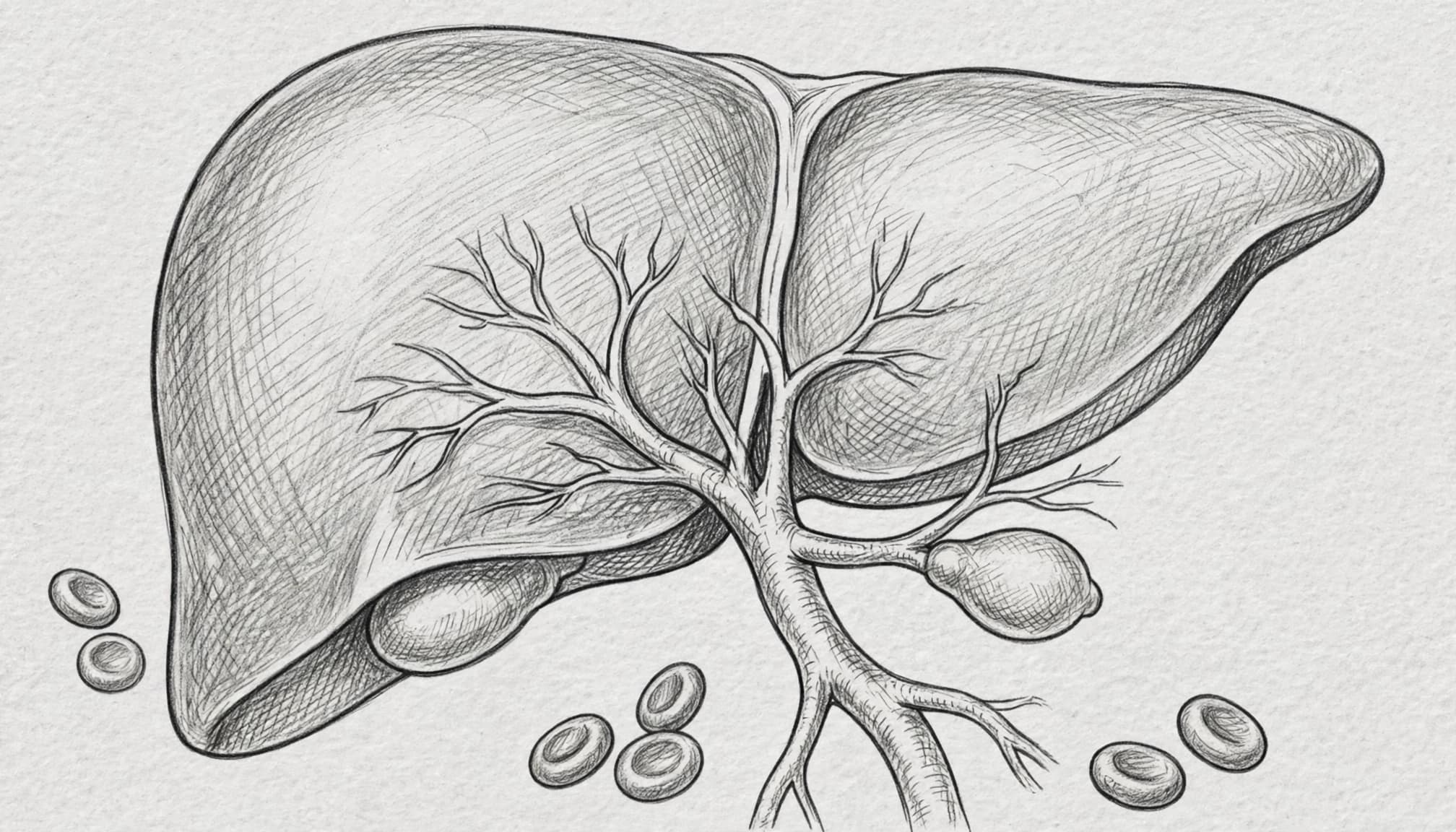
Liver enzymes: ALT, AST, ALP and GGT
ALT is the most liver-specific enzyme commonly included. AST also comes from the heart, skeletal muscle, kidneys, brain and red blood cells.
SGPT means ALT; SGOT means AST. Their approximate half-lives are 48 and 18 hours respectively, so ALT may take longer to normalise.
ALP can come from liver or bone. Raised ALP alongside GGT supports a liver or bile-duct source. Together, they can indicate cholestasis, meaning reduced or blocked bile flow.
Bilirubin, proteins and clotting
Adults produce about 250 to 350 mg of bilirubin daily, mainly through red-blood-cell breakdown. The liver processes unconjugated, or indirect, bilirubin into conjugated, or direct, bilirubin.
Haemolysis, accelerated red-cell breakdown, typically causes predominantly unconjugated bilirubin, with a direct fraction below 20%. A conjugated fraction above 50% favours liver or bile-duct disease, but isn't diagnostic.
Albumin's roughly 20-day half-life means low levels may reflect longer-standing impairment rather than sudden injury. Cirrhosis, inflammation, poor nutrition and kidney protein loss can also lower it.
Total protein includes albumin and globulins. Prothrombin time (PT) and INR measure clotting and can reveal reduced clotting-protein production. Vitamin K deficiency and anticoagulants can also prolong prothrombin time and affect INR.
What Counts as a Normal Result?
These are illustrative adult intervals, not universal diagnostic cutoffs.
<table><thead><tr><th>Test</th><th>Example adult interval</th></tr></thead><tbody><tr><td>ALT</td><td>7 to 55 U/L</td></tr><tr><td>AST</td><td>8 to 48 U/L</td></tr><tr><td>ALP</td><td>40 to 129 U/L</td></tr><tr><td>GGT</td><td>8 to 61 U/L</td></tr><tr><td>Total bilirubin</td><td>0.1 to 1.2 mg/dL</td></tr><tr><td>Albumin</td><td>3.5 to 5.0 g/dL</td></tr><tr><td>Total protein</td><td>6.3 to 7.9 g/dL</td></tr><tr><td>PT / INR</td><td>Approximately 10 to 13 seconds / 0.8 to 1.1 without anticoagulants</td></tr></tbody></table>Intervals vary by laboratory, age, and sex, so the reference range printed beside your result is the relevant comparison. A result within a normal range doesn't exclude every liver condition.
How Abnormal Patterns Guide Follow-Up

These patterns can guide evaluation, but they don't confirm liver disease on their own.
Hepatocellular, cholestatic and mixed patterns
A hepatocellular pattern has proportionally higher ALT and AST, indicating hepatocellular injury, but it doesn't identify the cause on its own. Causes include fatty liver disease, viral hepatitis and drug-induced liver injury.
A cholestatic pattern has proportionally higher ALP and GGT, sometimes with raised bilirubin. Clinicians may investigate biliary obstruction, but the pattern alone doesn't confirm it. Ultrasound is usually first-line imaging. Portal-vein size may be assessed, but diameter alone doesn't diagnose disease.
A mixed pattern combines both. Isolated unconjugated bilirubin can occur in Gilbert's syndrome, a usually harmless inherited condition affecting approximately 5% of people.
Borderline results and next steps
bpac New Zealand's primary-care guidance estimates elevated enzymes occur in up to 9% of people without symptoms. It classifies elevations below twice the upper limit as borderline and two to five times as mild.
The size of an increase doesn't predict prognosis by itself, so results need clinical context. For asymptomatic people with borderline results and a modifiable cause, such as fatty liver disease, repeat testing within three months may be appropriate.
Follow-up may include hepatitis tests, targeted testing for viral hepatitis, iron studies or imaging. New jaundice needs prompt assessment; confusion, vomiting blood or severe abdominal pain needs urgent care.
Frequently Asked Questions
Do I need to fast or stop medicines?
Fasting guidance varies. A WHO training module on liver tests recommends overnight fasting and cites possible twofold to threefold meal-related ALT/AST changes. Other guidance doesn't require fasting for liver tests alone. Follow your blood-draw instructions, especially when fasting glucose is included.
Don't stop prescribed medicines yourself. Report all medicines and supplements. Mayo Clinic's liver-disease guidance identifies more than 1,000 medicines and herbal products linked to liver damage.
bpac associates medicines with at least 20% of acute liver failure events. Paracetamol toxicity is dose-dependent; suspected overdose needs immediate medical attention.
How can I improve abnormal liver results?
Treatment depends on the cause. Reducing alcohol, managing diabetes and losing excess weight can help when relevant. Avoid unproven "liver detox" supplements, which can themselves cause injury.
When should adults have testing?
Testing is useful for symptoms, risk factors such as exposure to viral hepatitis, medicine monitoring or follow-up of known disease. There's no single screening schedule for every healthy adult.
Our full health checkup includes bilirubin fractions, enzymes, albumin, globulin and the albumin-to-globulin ratio. PT/INR isn't automatically included in every liver panel.
Understanding Your Results
Liver function tests provide clues about injury, bile flow and protein production. Their meaning comes from the complete pattern, not one highlighted number.
Review abnormal results with a healthcare professional. The appropriate next step may be repeat testing, further investigation or treatment of an identified cause.