


A kidney function test shows how well your kidneys filter waste and whether there are signs of kidney damage. Blood and urine results provide different information, so they're best read together.
An abnormal number doesn't automatically mean chronic kidney disease. Understanding what each result measures helps you discuss the right next step with a healthcare professional.
Key Takeaways
-
Blood tests estimate filtration; urine tests look for signs of damage.
-
eGFR and UACR are the main numbers to understand.
-
Trends and repeat testing usually tell more than one isolated result.
What a Kidney Function Test Measures
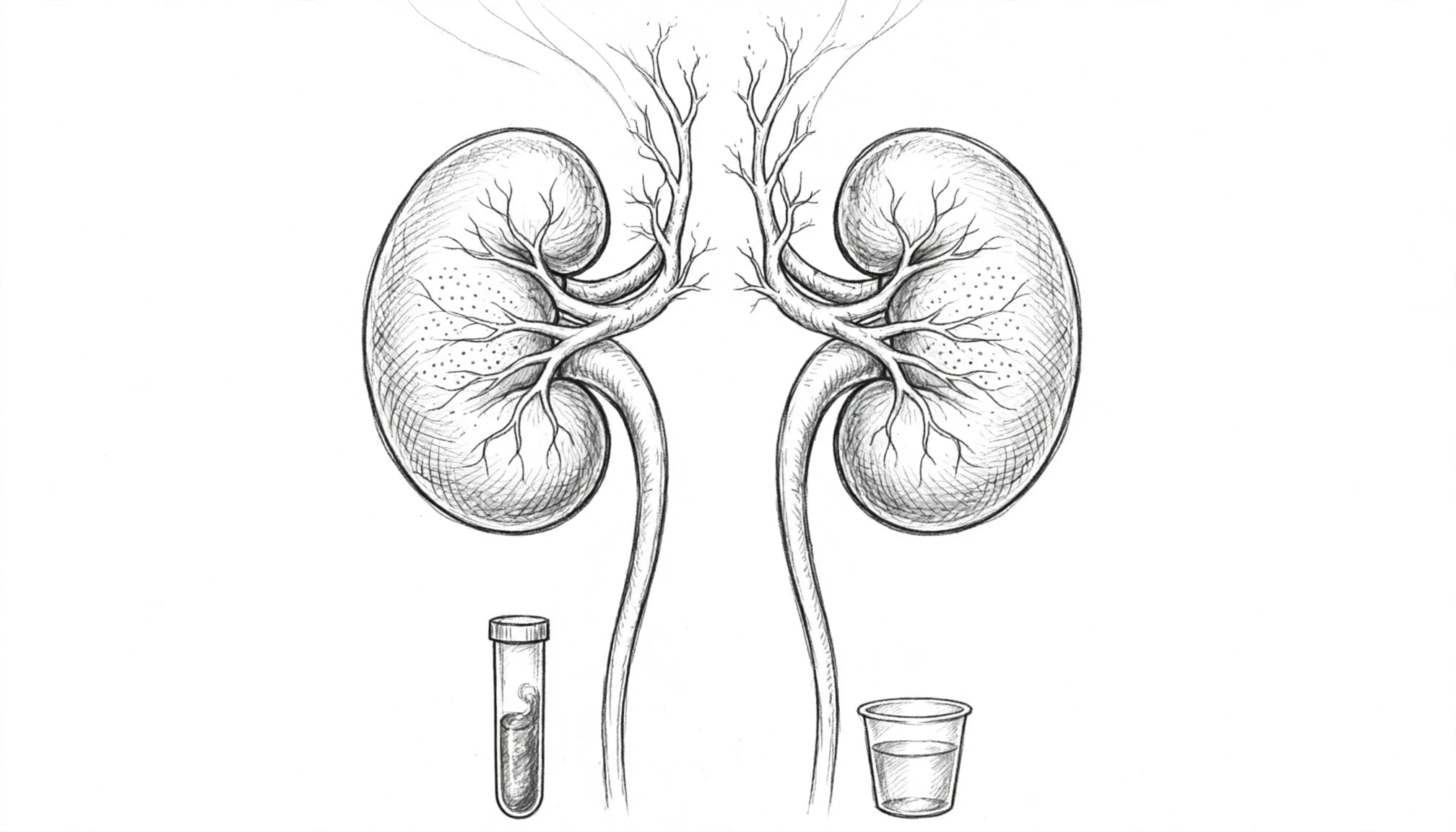
Blood tests assess filtration and waste
A blood test measures creatinine, a waste product made by muscles. When kidney filtration falls, creatinine can build up in the blood.
The estimated glomerular filtration rate (GFR), reported as eGFR, uses serum creatinine, age and sex to estimate filtration. The 2021 CKD-EPI equation doesn't include a race coefficient.
Blood urea nitrogen, or BUN, measures another waste product. It can't diagnose kidney disease alone. Panels may also measure electrolytes, including potassium and sodium. Comprehensive panels may include serum calcium. Kidneys handle about 90% to 95% of potassium regulation; the colon handles the remainder.
Urine tests look for leakage and other changes
Healthy kidneys keep most albumin, a blood protein, out of urine. The urine albumin-creatinine ratio, called UACR or ACR, measures albumin against urine creatinine.
A dipstick gives a quick indication of protein but doesn't measure albumin precisely. A urine test also checks for blood in urine, glucose and infection-related changes during routine urinalysis.
Proteinuria means protein is present in urine. Albuminuria is a specific form that can indicate kidney damage, but a single abnormal result doesn't establish a diagnosis.
Our routine urine analysis examines these broader markers. It isn't a substitute for a dedicated UACR measurement. A renal function test may combine blood markers and urine findings, with tests selected according to the clinical question.
Kidney Test Results at a Glance
These results answer different questions about kidney health.
<table><thead><tr><th>Test</th><th>Expected result</th><th>What raises concern</th><th>Usual next step</th></tr></thead><tbody><tr><td>eGFR</td><td>Usually 90 or higher</td><td>Around 60 or below needs assessment; persistent values below 60 can indicate CKD</td><td>Compare previous results and repeat</td></tr><tr><td>Serum creatinine</td><td>Within the laboratory's reference range</td><td>Raised levels may reflect reduced filtration</td><td>Review alongside eGFR and muscle mass</td></tr><tr><td>BUN</td><td>Within the laboratory's reference range</td><td>Raised levels can reflect reduced filtration or dehydration</td><td>Interpret with other blood results</td></tr><tr><td>UACR</td><td>Below 3 mg/mmol or below 30 mg/g</td><td>Higher albumin can indicate kidney damage</td><td>Repeat to establish whether it persists</td></tr></tbody></table>eGFR is reported in mL/min/1.73 m². UACR uses different units, so 3 mg/mmol and 30 mg/g are different reporting thresholds, not identical numbers.
The CDC's kidney testing guidance explains that urine albumin results of 30 or above, reported in mg/g, may indicate kidney disease. Testing may be repeated once or twice to confirm.
How eGFR and Albumin Results Stage Kidney Disease
Doctors combine filtration and A categories because either result alone can miss part of the picture.
G categories describe filtration
The NHS kidney disease diagnosis guide describes these eGFR categories:
<table><thead><tr><th>Category</th><th>eGFR, mL/min/1.73 m²</th></tr></thead><tbody><tr><td>G1</td><td>90 or above</td></tr><tr><td>G2</td><td>60 to 89</td></tr><tr><td>G3a</td><td>45 to 59</td></tr><tr><td>G3b</td><td>30 to 44</td></tr><tr><td>G4</td><td>15 to 29</td></tr><tr><td>G5</td><td>Below 15</td></tr></tbody></table>G1 and G2 don't establish chronic kidney disease without other evidence of kidney damage. G5 describes kidney failure, but treatment decisions require clinical assessment.
A categories describe albumin leakage
Using mg/mmol, A1 is below 3, A2 is 3 to 30, and A3 is above 30.
A combined category such as G3aA2 describes both reduced filtration and moderately increased albumin. Higher levels of it can increase risk even when filtration remains relatively preserved.
Why One Abnormal Result Needs Context
Chronic kidney disease means kidney abnormalities persist for three months or longer. One low eGFR may reflect dehydration, recent illness or an acute kidney problem. Repeat testing helps distinguish temporary changes from chronic disease.
Age also affects interpretation. Cleveland Clinic's eGFR guide reports averages of 116 at ages 20 to 29 and 75 at 70 and over. These averages aren't individual diagnostic targets.
Muscle mass matters too. Muscular people can have higher creatinine without reduced kidney function. Measuring cystatin C alongside creatinine can give a more reliable estimate when creatinine may be misleading.
What Happens After an Abnormal Result?
A healthcare professional reviews previous results, blood pressure, diabetes status, medicines and recent illness. Follow-up may include repeat blood tests, UACR, or imaging when a blockage or structural problem is suspected.
The National Kidney Foundation's lab-results guide recommends an annual basic or comprehensive metabolic panel, a blood test that can include kidney markers. People with diabetes or high blood pressure should have creatinine checked at least yearly.
Our full health checkup includes kidney blood markers such as creatinine, BUN and eGFR.
Arrange a medical review for increased urination, bloody or foamy urine, extreme fatigue, or swollen hands, feet or ankles. New or worsening shortness of breath needs prompt assessment; severe breathlessness needs emergency care.
Frequently Asked Questions
Can kidney tests be normal despite kidney damage?
Yes. eGFR can remain normal while urine albumin is raised. That's why blood and urine testing complement each other.
Does a low eGFR mean dialysis is needed?
No. Many people with reduced eGFR don't need dialysis. Decisions depend on the degree of impairment, symptoms, complications and the overall clinical picture.
Understanding Your Results Together
A kidney function test is most useful when filtration, UACR and previous results are considered together. A single flagged value is a reason for assessment, not a diagnosis by itself.
Discuss the report with a healthcare professional so any repeat testing or treatment matches the findings.