


Screening estimates the likelihood of disease in asymptomatic people, while diagnostic testing investigates symptoms or an abnormal result. In screening vs diagnostic testing, purpose matters more than the equipment or sample involved.
A screening result indicates whether further investigation is needed; a diagnostic test helps establish the presence or absence of disease. Screening may be appropriate for people at higher risk of developing disease, even before they notice changes in their health. Understanding this distinction can help you interpret results and decide on the next step in your care.
Screening vs diagnostic tests at a glance
Screening and diagnostic tests can both identify health problems, but they answer different questions. Screening asks whether someone without symptoms might have a condition or increased risk. Diagnostic testing investigates a specific concern.
Here's how they compare in everyday care.
<table><thead><tr><th>Feature</th><th>Screening tests</th><th>Diagnostic tests</th></tr></thead><tbody><tr><td>Main purpose</td><td>Find possible disease or increased risk early</td><td>Establish or rule out a suspected condition</td></tr><tr><td>Typical patient</td><td>Someone without signs of a problem</td><td>Someone with a specific concern or an abnormal screen</td></tr><tr><td>Common result</td><td>Lower or higher likelihood of a problem</td><td>More detailed evidence about a particular condition</td></tr><tr><td>Possible next step</td><td>Routine screening or further investigation</td><td>Treatment, monitoring, or additional tests</td></tr></tbody></table>The distinction isn't absolute. Some screening tests can establish a definite diagnosis when accepted criteria are met, but diagnostic testing may still need follow-up. Laparoscopy can investigate a suspected abdominal or pelvic concern, unlike routine screening.
For example, a mammogram can fill either role. A routine exam screens someone without breast changes; a diagnostic exam investigates a new breast change or an earlier abnormal image. The reason for ordering it determines its role.
Who needs screening, and who needs investigation?
Screening when you feel well
Health screening can support early detection by finding changes before you notice them, even when you're asymptomatic. High cholesterol and raised blood sugar, for example, may develop without obvious symptoms.
However, feeling well doesn't mean you need every available test. Your age, family history, previous results, and personal risk factors help determine which screening offers useful information. People with inherited conditions or a higher risk of developing disease may need earlier or more frequent screening.
Our custom health checkup options allow you to select individual tests. A clinician can help match those choices to your history rather than choosing solely by package size.
Diagnostic testing when there's a concern
Symptoms change the purpose of testing. Persistent thirst, unexplained weight loss, or a new breast lump calls for assessment of a particular problem.
Diagnostic tests also help people who feel well but have an abnormal screen. A specific concern can warrant follow-up even when you feel well.
For some abdominal or pelvic concerns, laparoscopy lets a surgeon inspect the area directly during an investigation.
Share any health changes with your clinician before booking a routine checkup. That information can change the tests you need and how urgently you need them. Screening alone doesn't replace a medical examination when you're unwell.
Familiar screening tests and what they show
Mammograms for breast cancer

Screening mammograms look for breast changes in people who feel well. An abnormal finding can lead to additional images or other investigations, but it doesn't automatically mean breast cancer. If follow-up imaging remains suspicious, a clinician may consider a biopsy.
The USPSTF mammography recommendation advises screening every two years for women aged 40 to 74. This is a US recommendation, and individual schedules can differ according to risk and medical history.
A new breast change needs assessment even if your next routine mammogram isn't due.
Blood-sugar and cholesterol tests
Fasting glucose and HbA1c can identify raised blood sugar before signs appear. HbA1c is a laboratory test that reflects average blood glucose over roughly two to three months.
A lipid profile measures cholesterol and triglycerides. These results help assess cardiovascular risk rather than diagnose a blocked artery.
Our health-checkup blood tests include these markers, alongside options such as kidney function and iron studies. Their usefulness depends on the question being asked; a longer test list doesn't automatically provide better care.
Colorectal cancer screening
Colonoscopy is one option for colorectal cancer screening and lets clinicians examine the colon and rectum. An abnormal stool-based screen may lead to colonoscopy for further investigation. Screening may find colon cancer before it causes problems.
Family history can affect when screening starts and which approach a clinician recommends.
Early detection matters. The National Cancer Institute's SEER colorectal cancer statistics report 91.3% five-year relative survival for localized disease. This describes outcomes across a population, not an individual's prognosis or a guarantee of cure.
How an abnormal screen leads to follow-up
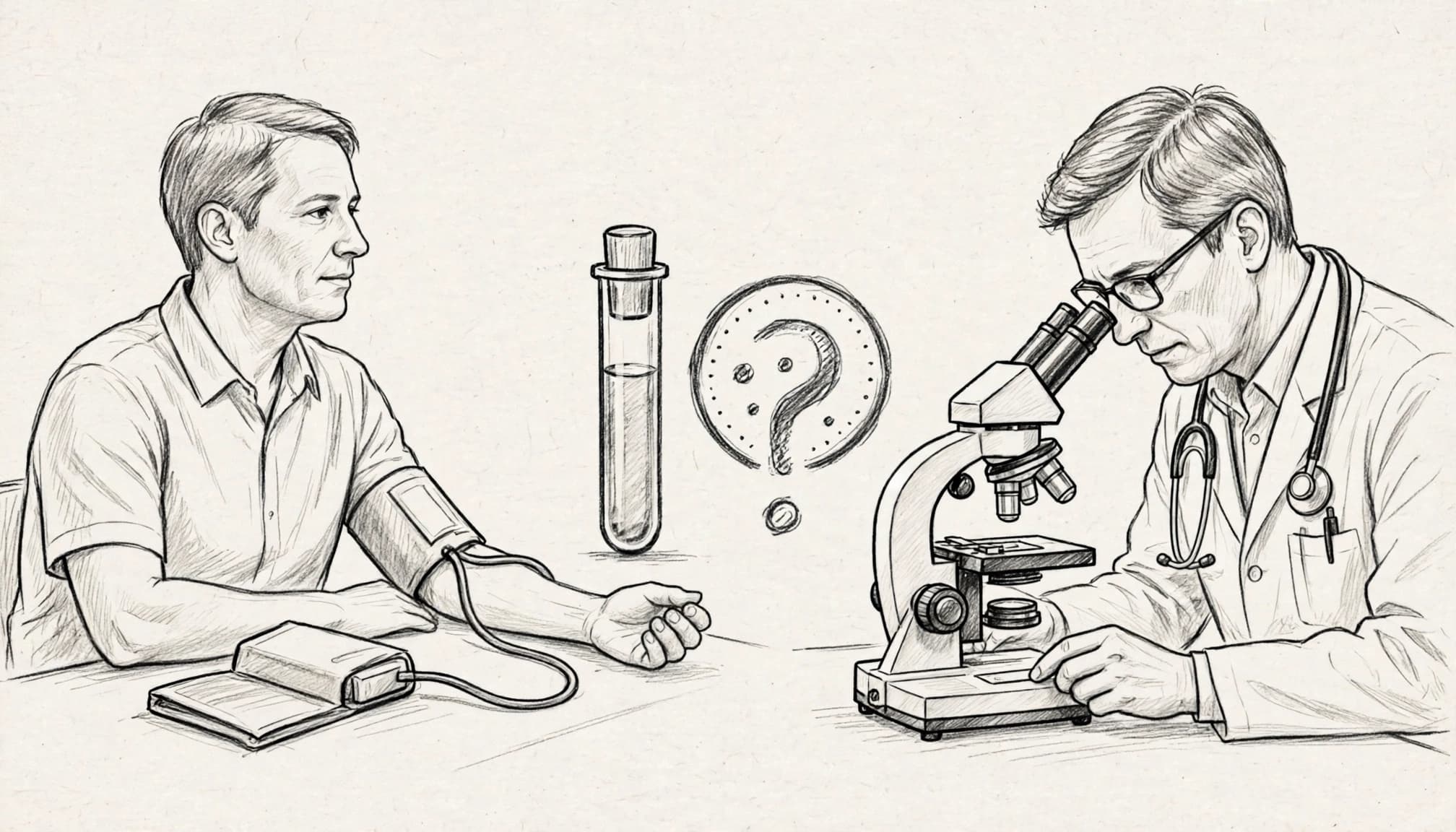
A positive screening test means the first test hasn't answered the clinical question completely. Follow-up usually focuses on the finding that needs clarification.
Breast screening provides a familiar example:
-
A routine screening mammogram identifies an area that needs a closer look.
-
The imaging team obtains diagnostic views and may perform an ultrasound.
-
A clinician reviews the findings and recommends routine screening, closer monitoring, or further investigation. If imaging doesn't clarify a finding, a clinician may recommend a biopsy to determine whether it is breast cancer.
A callback can happen because an image needs clarification or because a finding requires assessment. Neither reason, by itself, confirms cancer.
Blood-sugar screening follows a similar principle. In someone without clear symptoms, a result in the diabetes range generally needs confirmation with repeat testing or another accepted test.
However, follow-up doesn't always mean repeating the same investigation. A clinician may choose a different test because it answers a more precise question.
An abnormal screening result starts an investigation. The follow-up test may narrow the possibilities without providing the final answer.
The timing matters, too. Follow the recommended timeframe rather than waiting until you feel unwell, since screening often identifies concerns while you still feel well.
What test accuracy means for your result
Sensitivity and specificity measure different things
Sensitivity describes how well a test identifies people who have the condition. A highly sensitive test misses fewer affected people.
Specificity describes how well a test identifies people who don't have the condition. A highly specific test produces fewer false alarms.
Screening programmes often prioritize finding possible disease early, while follow-up tests help distinguish genuine disease from other explanations. However, neither category automatically guarantees a particular level of accuracy.
A test's performance also depends on the condition, the threshold used to define an abnormal result, and the population receiving it. A headline accuracy percentage doesn't explain all those details or establish the presence or absence of disease in one person.
False results and your underlying risk
A false positive means a test suggests a problem that isn't present. A false negative means it misses a condition that is present. OncoLink explains both in its guide to cancer screening results.
Your underlying likelihood of disease affects what a positive result means. The probability of disease is lower in populations where the condition is uncommon, so false positives can account for a substantial share of abnormal results.
A negative screen lowers concern but doesn't rule out every possibility. New or persistent concerns still need assessment.
Tests can also detect genuine abnormalities that would never cause harm. This is overdiagnosis, which differs from a false positive and can lead to unnecessary treatment.
Where whole-body MRI fits
A whole-body MRI scan may be used for screening when someone has no specific health concern. A targeted MRI scan, by contrast, can investigate a particular concern or abnormal finding.
A Verywell Health overview of Prenuvo describes its whole-body MRI service as able to detect 500 medical conditions. That number doesn't establish how reliably it detects each condition or whether scanning everyone improves health outcomes.
Broad imaging can also reveal incidental findings, meaning unexpected abnormalities unrelated to the original reason for testing. These findings may point to different medical conditions. Some require assessment; others prove harmless.
A systematic review of preventive MRI found that a substantial proportion of concerning or uncertain incidental findings were false positives. These findings can lead to repeat scans, appointments, and anxiety.
The same screening principles apply: consider your risk, the evidence supporting the test, and what would happen after an abnormal result. Whole-body imaging doesn't replace established screening programmes or a focused medical assessment.
A scan report also needs clinical interpretation. Listing an abnormality on an image is different from determining its cause, importance, and whether treatment would help.
Key takeaways
-
Screening looks for possible disease or increased risk before signs of illness appear.
-
Diagnostic testing investigates symptoms or an abnormal screening finding.
-
The same test can serve either purpose, depending on why a clinician orders it.
-
A positive screen needs interpretation and sometimes further testing; a negative screen doesn't rule out a problem when concerns persist.
The useful distinction in screening vs diagnostic tests is the clinical question each test answers, rather than its name or complexity.
Frequently asked questions
What is a confirmatory test?
A confirmatory test checks whether an earlier finding reflects a genuine condition. A positive screening test isn't itself a diagnosis, and follow-up may repeat the original test or use a different method.
For example, an abnormal blood-sugar result may require another accepted diabetes test. Confirmation reduces the chance of making a diagnosis based on a temporary change or misleading result. The need for confirmation depends on the condition and the person's symptoms.
How does this difference apply during pregnancy?
Prenatal screening estimates the likelihood of certain conditions affecting the pregnancy. A higher-chance result doesn't establish that the baby has the condition.
The American College of Obstetricians and Gynecologists advises diagnostic follow-up after a positive cell-free DNA screen. Its prenatal genetic screening guidance identifies amniocentesis or chorionic villus sampling as diagnostic options. These procedures have different considerations, so counselling helps parents understand what each result can establish.
Can a normal screening result explain my symptoms?
A normal screen may be reassuring about the condition it assessed, but it doesn't explain every health concern or rule out unrelated illnesses.
For example, normal cholesterol results don't establish the cause of chest pain. Persistent concerns need their own assessment. Tell your clinician when they began, whether they're changing, and which screening tests you've already completed.
Choose the test that answers your concern
Screening is part of proactive healthcare, supporting early detection when you feel well. Diagnostic testing addresses a specific concern and helps determine what care you need.
The most useful next step depends on why you're testing, your risk factors, and any symptoms. Before booking, identify whether you need routine prevention or investigation of a problem.
If you have a new or worsening health concern or an abnormal result, arrange a medical assessment rather than relying on a broader screening package for an answer.