


Preventive screening in the UAE starts with adult health checks, then adds age-appropriate cancer screening and vaccination reviews. Your personal health history determines whether you need earlier testing or shorter intervals.
A useful calendar combines your age, sex, family history, and earlier findings. Start with the schedule below, then use the relevant Dubai or Abu Dhabi pathway to plan your next appointment.
Key takeaways
-
Blood pressure, blood sugar, and cholesterol deserve attention before symptoms appear.
-
Breast and colorectal screening commonly start at 40 in UAE pathways, while cervical screening starts at 25.
-
Screening intervals differ between programmes, so record the pathway, test, and next due date together.
Your UAE preventive screening calendar
These are planning points for symptom-free adults following standard pathways, not a schedule for managing an existing condition.
<table><thead><tr><th>Screening or review</th><th>Typical age or interval</th><th>Who it applies to</th></tr></thead><tbody><tr><td>Blood pressure and weight</td><td>From 18; during routine reviews, sooner after raised readings</td><td>All adults</td></tr><tr><td>Diabetes testing</td><td>Adult risk assessment; repeat according to baseline readings and risk</td><td>Especially adults with excess weight, family history, or previous gestational diabetes</td></tr><tr><td>Cholesterol profile</td><td>Adult baseline; repeat testing guided by cardiovascular profile</td><td>All adults, especially those with cardiovascular risk factors</td></tr><tr><td>Cervical screening</td><td>Ages 25-65; usually every 3-5 years depending on programme</td><td>Eligible women with a cervix</td></tr><tr><td>Screening mammogram</td><td>From 40; annual under Mediclinic guidance or every two years under DHA guidance</td><td>Average-risk women without breast symptoms</td></tr><tr><td>Colorectal screening</td><td>Ages 40-75; FIT every two years or colonoscopy every 10 years</td><td>Average-risk adults</td></tr><tr><td>Vaccination review</td><td>During routine reviews; influenza annually</td><td>All adults, with age-specific additions</td></tr><tr><td>Bone health assessment</td><td>Commonly from 65 for women; earlier with fracture risk</td><td>Older adults and people with risk factors</td></tr></tbody></table>For health screening guidance, the DHA periodic screening guideline provides a Dubai framework for eligible adults aged 18 and over, generally with periodic screening every three years. Individual findings can shorten that interval.

Build your baseline before age 40
Blood pressure, blood sugar, and cholesterol
A preventive review should include blood pressure, weight, and an assessment of metabolic health. Depending on your history, blood tests can include glucose, HbA1c, and a lipid profile.
HbA1c estimates average blood sugar over roughly three months. A lipid profile measures cholesterol and triglycerides, which help assess cardiovascular risk. The UAE national screening manual places these checks within a broader preventive assessment.
One elevated blood pressure reading doesn't usually establish hypertension. Repeat measurements help distinguish a persistent problem from a temporary rise.
Risk factors can move testing earlier
Smoking, excess weight, hypertension, previous gestational diabetes, and close relatives with early heart disease can change your schedule. Existing diabetes or kidney disease requires monitoring beyond a routine screening calendar.
Family history also affects which tests are useful. Our explanation of lipoprotein(a) and inherited heart risk covers a cholesterol-related risk factor that standard lipid panels don't measure.
Record previous abnormal results rather than restarting with an unrelated package each year.
Schedule cervical and colorectal screening
Cervical screening starts at 25
Cervical screening looks for changes associated with cervical cancer, often before symptoms develop. Human papillomavirus, or HPV, analysis identifies high-risk virus types linked to these changes.
Dubai guidance lists screening every three years at ages 25-49 and every five years at ages 50-65 for eligible, average-risk women.
Abu Dhabi's cervical screening standard uses three-year intervals at ages 25-29 and five-year intervals at ages 30-65, with an HPV assay included from 30.
Our HPV screening test detects high-risk strains. Earlier abnormal findings or treatment can require a different follow-up schedule.
Colorectal screening starts at 40
Dubai's average-risk pathway covers adults aged 40-75. Options include a faecal immunochemical test, or FIT, every two years, or colonoscopy every 10 years.
FIT checks stool for small amounts of blood. A positive result needs diagnostic follow-up, usually a colonoscopy through the referring clinic or hospital pathway. Repeating FIT doesn't replace that investigation.
A parent or sibling with colorectal cancer, previous bowel polyps, or inflammatory bowel disease can mean earlier or more frequent testing. Visible rectal bleeding, persistent bowel changes, or unexplained weight loss require medical assessment rather than waiting for routine screening.
Breast screening from age 40
Mediclinic cites WHO figures of 1,030 new breast cancer diagnoses, accounting for 21.4% of UAE cancer cases in the figures referenced.
Eligibility and screening frequency
Mediclinic's AED 375 package includes a Family Medicine virtual consultation and mammogram. Eligibility requires being female, aged 40 or above, with no mammogram in the previous 12 months. You must not be pregnant or breastfeeding, or already seeing a doctor for breast problems.
Mediclinic recommends annual screening for symptom-free, average-risk women from 40. DHA's Dubai guideline uses two-year intervals. Your recorded plan should identify which clinical pathway you're following.
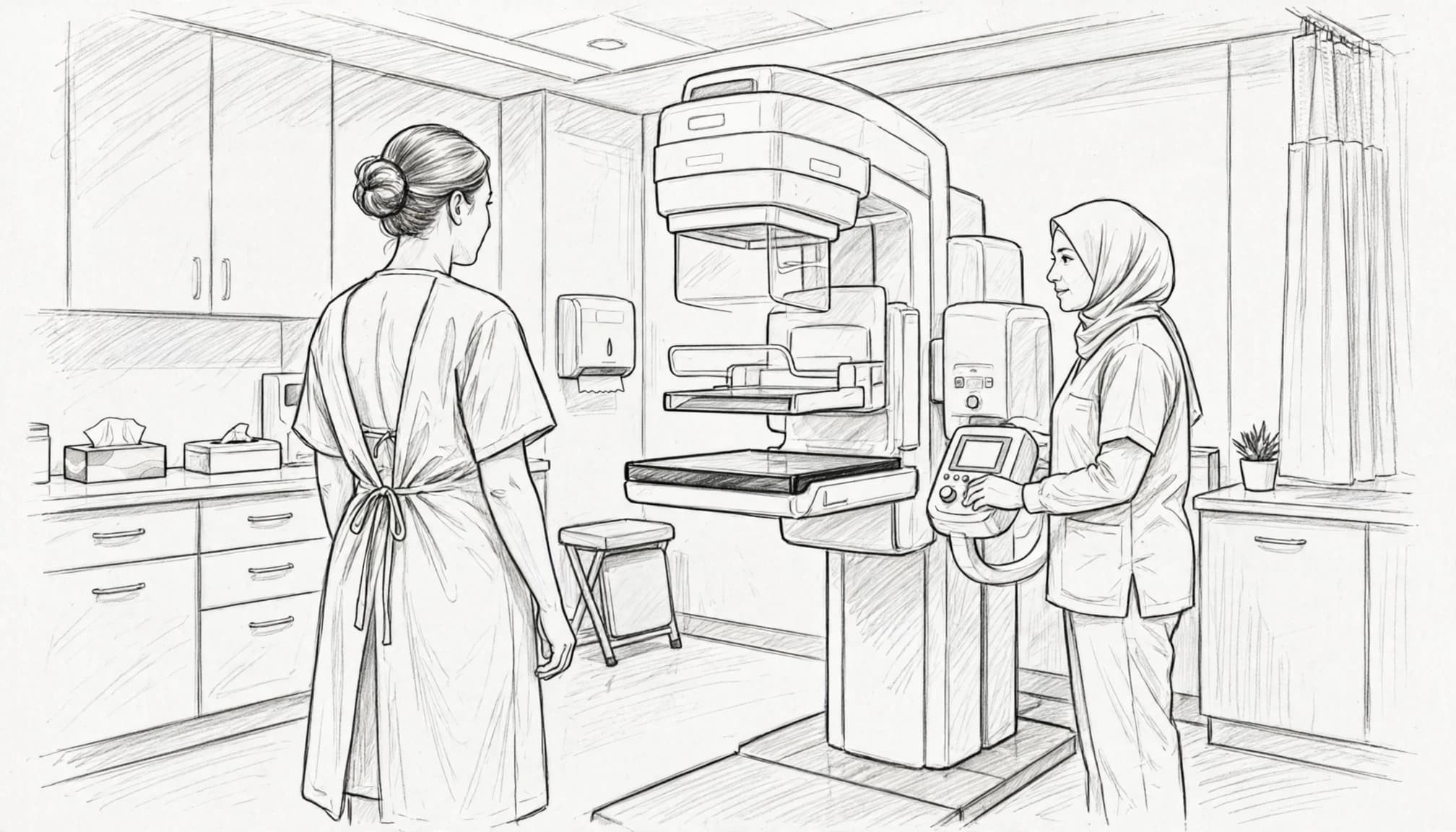
Preparation and the appointment
Schedule the appointment when your breasts are least tender. Bring previous mammogram images on a CD for comparison.
Avoid deodorants, antiperspirants, powders, lotions, creams, and perfumes around the breasts and underarms on the day.
The mammogram usually takes less than 30 minutes. You can return to normal activities afterward.
Results and further assessment
Mediclinic's virtual-clinic Family Medicine doctor shares the findings within three weeks, or 15 working days.
An abnormal mammogram doesn't necessarily mean cancer. Assessment may involve additional mammogram views, breast and axillary (underarm) ultrasound, breast fine-needle aspiration, or image-guided biopsy. A hospital breast-imaging service may coordinate these steps.
A new breast lump or nipple change needs prompt clinical assessment, even when your next screening appointment isn't due.
Add vaccinations and life-stage checks
Keep an adult vaccination record
Vaccination belongs beside screening on your calendar. Influenza vaccination is annual, while tetanus-containing boosters are generally given every 10 years.
HPV, hepatitis B, shingles, and pneumococcal vaccination depend on age, previous doses, medical conditions, and eligibility. Pregnancy planning also creates an opportunity to review immunity and vaccination history before conception.
Keep a dated record, because recalling that you "had the vaccine" doesn't establish whether the course is complete.
Adjust the plan as circumstances change
After menopause, fracture risk becomes more relevant. Bone density testing commonly starts at 65 for women, with earlier assessment after a fragility fracture or other significant risks.
Premarital screening follows a separate pathway. Expanded UAE genetic screening in 2025 covered approximately 570 genes linked to more than 840 conditions.
Previous cancer treatment, immune suppression, and long-term medicines can also change screening needs.
Understand package prices and what they cover
Choose relevant tests rather than the largest panel
A routine blood package may include blood count, glucose or HbA1c, cholesterol, and kidney or liver measurements. Thyroid, hormone, vitamin, and specialist tests should answer a relevant clinical question.
Ken Research describes 2026 private-market price tiers near AED 699 for basic checks, around AED 1,000 for essential preventive packages, and above AED 11,000 for premium comprehensive packages. These are market categories, not standard UAE prices.
Our Full Health Checkup costs AED 2,399 and includes 172 tests, with reports issued in five days. A broad laboratory panel still doesn't replace mammography, cervical screening, or colorectal screening.
Why follow-up matters as services expand
Ken Research reports that, in 2024-2025, 25.9% of UAE adults had high blood pressure, 12.5% had elevated blood glucose, and 22.4% were living with obesity.
The report values the preventive healthcare market at USD 5,000 million in 2025, forecasting USD 8,908 million by 2032 at 8.60% annual growth. It projects preventive encounters rising from 30.8 million to 49.2 million.
It also reports more than five million patient records in Abu Dhabi's Malaffi platform and about 49.6 million Dubai insurance claims in 2025. For patients, the practical priority remains keeping accessible copies of reports and completing recommended follow-up.
Book, prepare, and close the follow-up loop
For preventive services such as regular health checkups in the UAE, use a repeatable process:
-
Gather previous reports, vaccination records, medication details, and relevant family history.
-
Select the checks due under your age-based plan, then choose home sample collection or a centre appointment.
-
Follow the preparation instructions for that test. HbA1c doesn't require fasting, but some combined packages do.
-
Review the report with a clinician, complete any referral, and record the next due date.
We offer online booking for home sample collection across all emirates and in-centre visits. Some checkups issue reports from one day; specialist investigations have different timelines.
For example, our Full Health Checkup requires eight to 12 hours of fasting. Preparation belongs to the booked procedure, not to a universal rule for every blood draw.
Employment, occupational, and residency medical fitness assessments serve separate purposes. A wellness package doesn't automatically satisfy an employer's or licensing body's requirements.
Common questions about your screening calendar
Do I need every test annually?
No single annual panel suits every adult. Normal findings and low risk can support longer intervals, while raised readings or previous abnormalities need earlier review.
Keep the test name and due date together, because different screenings rarely fall due simultaneously.
Can a normal blood report replace cancer screening?
A normal blood report doesn't exclude breast, cervical, or colorectal cancer. Tumour-marker blood tests don't replace established screening methods for average-risk adults.
Also, persistent symptoms need assessment even after normal screening findings. Screening is designed for people without symptoms.
Keep a calendar you can act on
The most useful screening plan records what is due next, not simply how many tests you've completed. Age provides the starting point; personal history and previous results determine the adjustments.
Bring your records to your next preventive review. Leave with clear follow-up dates and a plan for any abnormal finding.