


PCOS symptoms often include irregular periods, excess facial or body hair, acne, and thinning scalp hair. Clinicians assess these patterns alongside hormone tests and, when needed, ultrasound; no single test diagnoses the condition.
WHO's 2023 estimates, cited in a 2025 published paper, put prevalence at 8-13% of women of reproductive age, with up to 70% undiagnosed.
If you're noticing changes, understanding what clinicians look for can help you prepare for an appointment.
Key takeaways
-
PCOS can affect people at any body weight.
-
Diagnosis depends on a pattern of findings, after excluding other causes.
-
Adolescents need different diagnostic criteria because puberty can resemble PCOS.
Common PCOS symptoms to recognise
Symptoms often become apparent in the late teens or early 20s, although diagnosis may happen later. You may notice several signs or only a few:
-
Periods become infrequent, unpredictable, or absent.
-
Excess hair growth, known as hirsutism, can cause coarse hair on the chin, upper lip, chest, abdomen, or back.
-
Persistent acne, oily skin, or thinning scalp hair develops.
-
Weight increases or becomes harder to manage, although weight gain isn't required.
-
Dark, velvety skin appears in neck creases, underarms, or the groin.
-
Pregnancy takes longer because ovulation, the release of an egg, happens less often.
The darkened skin patches are called acanthosis nigricans. They can indicate insulin resistance, where the body responds less effectively to insulin, the hormone that regulates blood glucose.
Depression and anxiety are more common with PCOS, and mood swings may bring someone to care before menstrual concerns do. Clinicians should ask about mood, daily functioning, and sleep rather than treating emotional symptoms as an afterthought.
However, fatigue and pelvic pain aren't diagnostic features. They deserve assessment for other explanations, including anaemia, thyroid disease, endometriosis, or sleep problems.
What PCOS means, including the PMOS name
Polycystic ovary syndrome is a hormonal and metabolic condition. "Hormonal imbalance" is shorthand for these features, not a separate diagnosis. Genetic factors and insulin resistance can contribute to increased activity of androgens. Androgens, including testosterone, are hormones that everyone produces, but excess activity can affect ovulation, skin, and hair.
The condition is manageable, although there isn't a permanent cure.
In May 2026, a Monash-led international consensus published in The Lancet introduced the name polyendocrine metabolic ovarian syndrome, or PMOS. Monash's terminology announcement explains the change, which better reflects effects beyond the ovaries.
During the transition, you may see either name. Telling a clinician "PCOS, also called PMOS" identifies the same condition; the terminology change doesn't require a new diagnosis.
Menstrual history starts the assessment
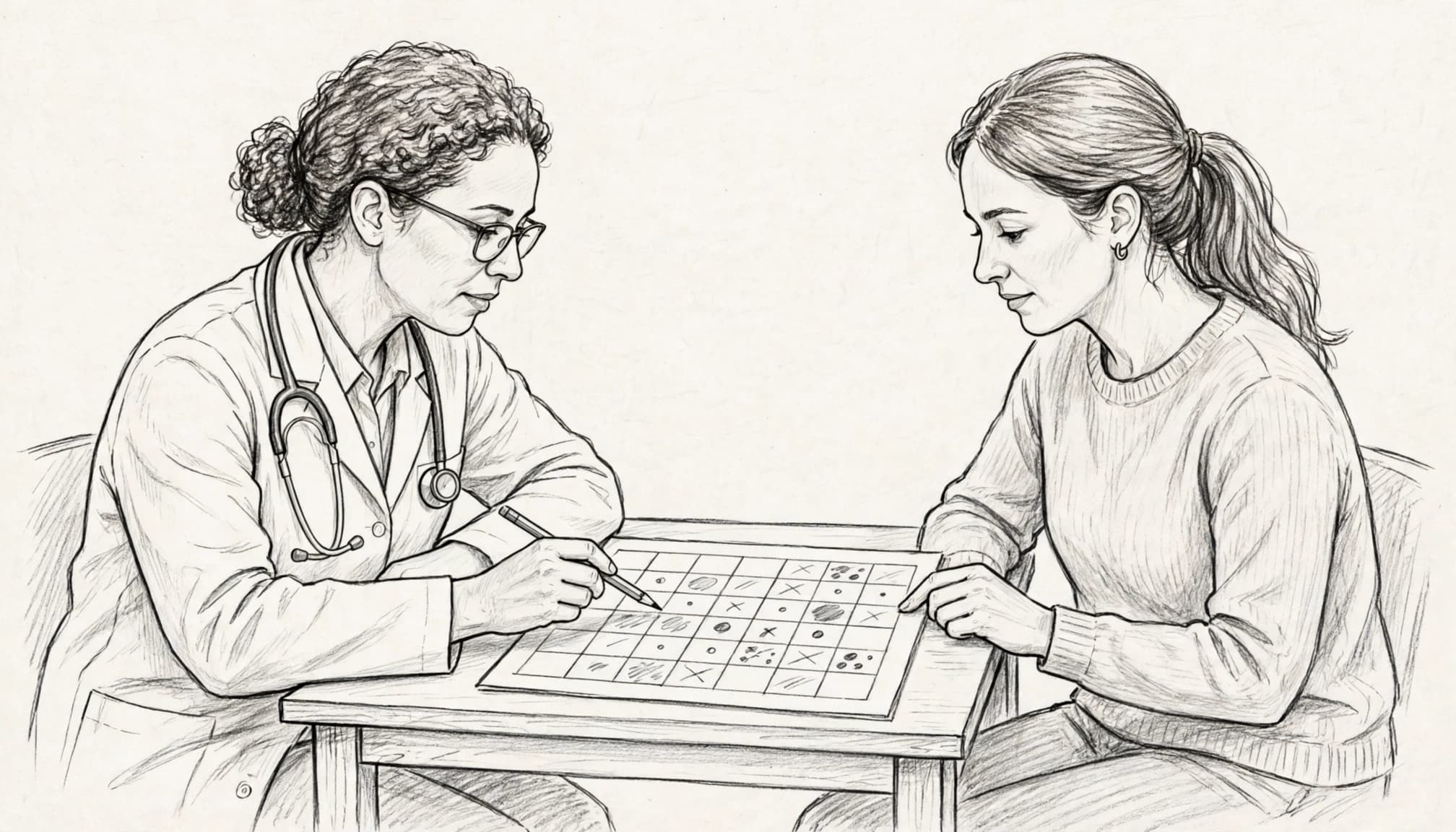
Measure cycles between period start dates
Cycle length runs from the first day of one period to the first day of the next. For example, bleeding beginning on 1 April and again on 29 April gives a 28-day cycle.
In adults at least three years beyond their first period, cycles shorter than 21 days, longer than 35 days, or fewer than eight periods yearly warrant assessment.
Regular bleeding doesn't always prove ovulation. When confirmation matters, a clinician may request progesterone testing, usually about seven days before the expected next period.
Bring a record of changes
Record period start dates, bleeding duration, missed months, and unusually heavy bleeding. Also note when acne, hair changes, or skin darkening began.
Bring your medication and supplement list, including contraception. Mention pregnancy plans, family history of diabetes or PCOS, and substantial weight changes.
During the examination, the clinician may assess blood pressure, skin, hair growth, and scalp thinning. Discuss hair removal too, because treatment can hide visible signs.
How clinicians diagnose PCOS in adults
For adults, the Rotterdam criteria require two of three features, after other causes have been excluded:
-
Irregular or absent ovulation.
-
Clinical signs or blood-test evidence of excess androgens.
-
Polycystic ovarian appearance on ultrasound.
The international evidence-based guideline states that adults with both irregular cycles and hyperandrogenism don't need ultrasound to establish the diagnosis.
For adults, anti-Müllerian hormone, or AMH, can sometimes replace ultrasound when assessing the ovarian feature. It isn't a stand-alone PCOS test, and routinely ordering both AMH and ultrasound can increase overdiagnosis.
Hirsutism can provide clinical evidence of androgen excess even when a testosterone result falls within the laboratory's reference interval. Acne or scalp hair loss alone is less specific.
Blood tests assess hormones and metabolic health
Hormone tests also exclude similar conditions
Clinicians commonly measure total testosterone and assess free testosterone, sometimes using sex hormone-binding globulin, or SHBG, to calculate an index. These results help determine whether androgens are elevated. Depending on the findings, they may add DHEAS or androstenedione.
There isn't one universal "normal testosterone" number for everyone. Laboratories use different methods and reference intervals, so interpretation must consider the assay, age, symptoms, and medication use.
Other tests may include thyroid-stimulating hormone, prolactin, and 17-hydroxyprogesterone to exclude conditions that can resemble PCOS. A pregnancy test is appropriate when pregnancy is possible. FSH and estradiol can help investigate other causes of absent periods.
Morning sampling or cycle-specific timing may matter. Hormonal contraception also changes results, but don't stop it without a clinician's plan.
Our Female Hormones Profile includes total testosterone, prolactin, FSH, LH, estradiol, progesterone, and AMH. A clinician should select the appropriate tests; a package alone doesn't establish the diagnosis.
Blood sugar assessment matters at every weight
PCOS increases the risk of impaired glucose regulation, including in people with a normal body weight. A 75-gram oral glucose tolerance test is the most accurate assessment; fasting glucose or HbA1c may be alternatives when it isn't practical.
HbA1c reflects average blood glucose over roughly two to three months. Clinicians also assess cholesterol and blood pressure.
Routine insulin measurements aren't recommended for diagnosing PCOS. Likewise, an LH-to-FSH ratio cannot confirm or exclude it.
What ultrasound can and cannot show
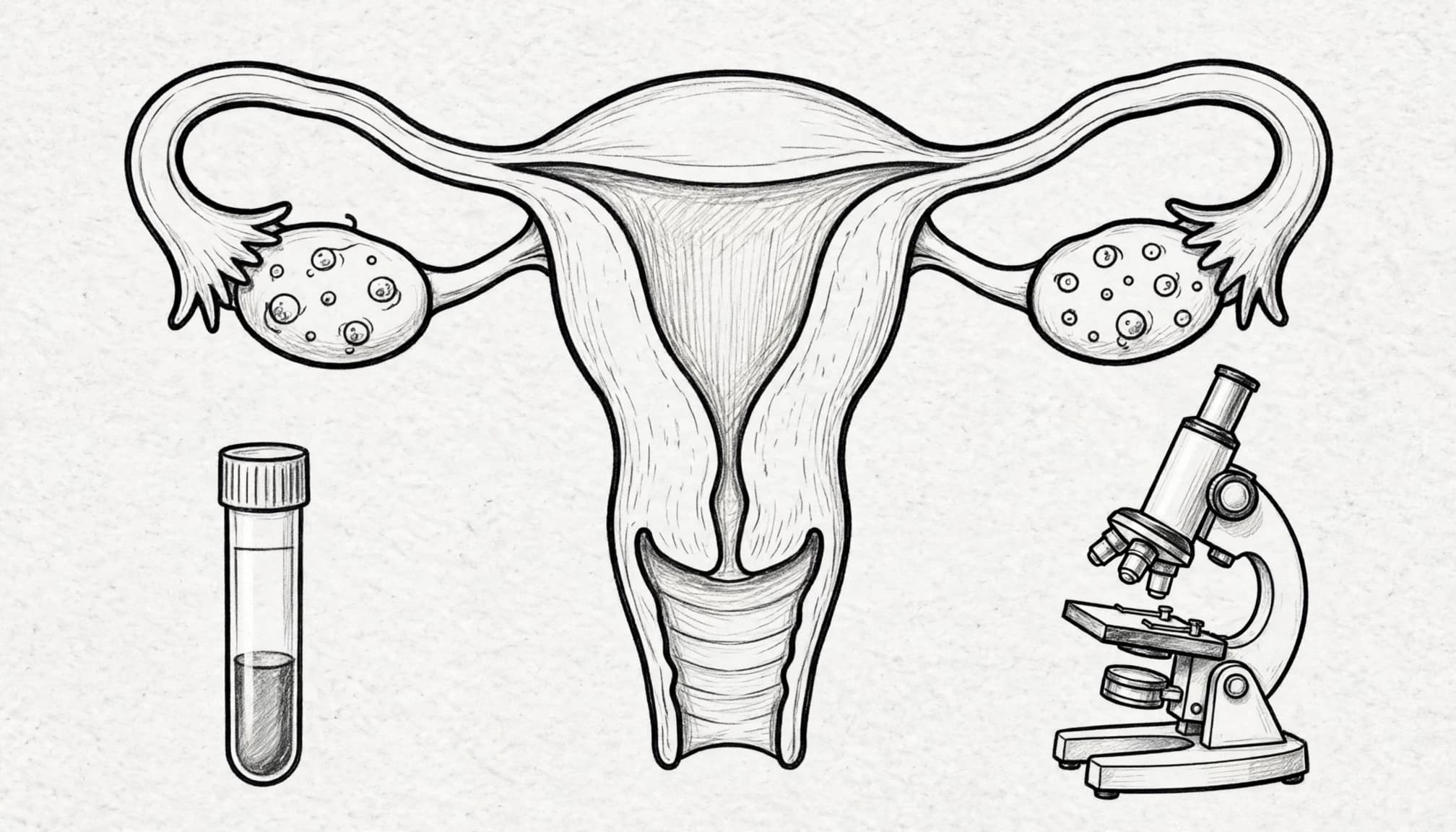
The structures often called ovarian cysts are usually small, fluid-filled follicles containing immature eggs. This appearance is known as polycystic ovaries, but many people with PCOS don't have it, and some people without PCOS do.
When imaging is useful, a pelvic ultrasound assesses follicle numbers and ovarian size. A transvaginal scan gives clearer detail when appropriate and acceptable to you; a transabdominal scan is another option.
The clinician should explain the procedure and obtain consent. An ultrasound finding alone doesn't establish PCOS, and a normal scan doesn't automatically exclude it.
Assessment is different for adolescents
Irregular periods and acne can accompany normal puberty. Therefore, clinicians consider time since the first period rather than applying adult thresholds immediately.
These menstrual patterns guide assessment:
<table><thead><tr><th>Time since first period</th><th>Pattern needing attention</th></tr></thead><tbody><tr><td>First year</td><td>Irregularity is common during pubertal transition.</td></tr><tr><td>One to under three years</td><td>Cycles repeatedly shorter than 21 or longer than 45 days.</td></tr><tr><td>Three years onward</td><td>Cycles shorter than 21 or longer than 35 days, or fewer than eight yearly.</td></tr><tr><td>More than one year onward</td><td>Any single gap longer than 90 days.</td></tr></tbody></table>Some variation can continue into the second year, but persistent extremes shouldn't be dismissed as puberty.
The adolescent diagnostic recommendations require both menstrual irregularity, judged by developmental stage, and clinical or biochemical androgen excess. Ultrasound and AMH aren't recommended for adolescent diagnosis because normal developing ovaries can resemble PCOS.
When only one feature is present, clinicians may document increased risk and reassess over time. Symptoms can still receive treatment without a premature diagnostic label.
Treatment follows your symptoms and goals
Daily habits support health without a restrictive diet
No single eating pattern is superior for everyone with PCOS. Practical lifestyle changes include choosing higher-fibre carbohydrates, vegetables, beans, and adequate protein, and drinking fewer sugary drinks. Regular activity and sufficient sleep support metabolic health even without weight loss.
For people with higher weight who want weight management, losing around 5-10% can improve insulin sensitivity, help regulate cycles, and reduce androgen levels. Weight loss isn't a treatment goal for everyone, and it shouldn't delay care.
Medicines depend on pregnancy plans
Combined hormonal contraception, also called hormonal birth control, can regulate bleeding and improve androgen-related symptoms. If oestrogen isn't suitable, a clinician may prescribe progestogen to protect the uterine lining. Metformin can support metabolic management, particularly when insulin resistance or glucose problems are present.
When pregnancy is the goal, letrozole is generally the first-line medicine for inducing ovulation. Fertility treatment may also include clomiphene or IVF if earlier treatments aren't successful. PCOS can contribute to infertility and make conception slower, but it doesn't mean pregnancy is impossible.
Follow-up also addresses type 2 diabetes, high cholesterol, high blood pressure, and sleep apnoea risk. Long gaps without bleeding can increase endometrial overgrowth and cancer risk, so cycle protection matters. Persistent snoring or daytime sleepiness deserves discussion.
Frequently asked questions
Does pelvic pain mean I have PCOS?
Pelvic pain alone doesn't diagnose PCOS. Persistent pain needs evaluation for other conditions. Seek urgent care for sudden severe pain, especially with vomiting, fever, fainting, or possible pregnancy.
Should I wait until I'm trying to conceive?
No. Assessment can address menstrual changes, skin symptoms, mood, and metabolic risks before fertility becomes a concern. Arrange an appointment if periods stop for over 90 days after the first post-menarche year, or hair growth progresses rapidly.
Prepare for an assessment, not a single test
A useful PCOS assessment connects your menstrual history with physical findings and carefully chosen investigations. The overall pattern matters more than one abnormal hormone result or ultrasound image.
Bring your cycle record and medication list to your appointment. Then agree on which tests are needed, what other conditions need exclusion, and how to manage symptoms while the assessment proceeds.