


Metabolic syndrome is a cluster of risk factors diagnosed when you have three or more of five findings involving waist size, blood pressure, blood sugar and blood fats. Together, these findings increase your risk of coronary heart disease, stroke and type 2 diabetes.
You can feel well and still meet the criteria, so symptoms alone can't identify it. Understanding the measurements helps you make sense of your results and prepare for a clinical assessment.
Key takeaways
-
Any three of the five criteria can establish metabolic syndrome; a large waistline isn't required.
-
Clinicians consider measurements, blood tests and medication history together.
-
Lifestyle changes and appropriate treatment can improve the numbers, but follow-up remains important even after results improve.
The five criteria for metabolic syndrome
Clinicians commonly use the American Heart Association and National Heart, Lung, and Blood Institute (NHLBI) framework.
These are the usual adult thresholds:
<table><thead><tr><th>Measure</th><th>Finding that meets the criterion</th></tr></thead><tbody><tr><td>Waist circumference</td><td>Over 40 inches (102 cm) for men or 35 inches (88 cm) for women, with lower thresholds appropriate for some populations</td></tr><tr><td>Triglycerides</td><td>150 mg/dL or higher</td></tr><tr><td>HDL cholesterol</td><td>Below 40 mg/dL for men or 50 mg/dL for women</td></tr><tr><td>Blood pressure</td><td>Systolic pressure of 130 mmHg or higher, or diastolic pressure of 85 mmHg or higher</td></tr><tr><td>Fasting blood glucose</td><td>100 mg/dL or higher</td></tr></tbody></table>The important point is any three, rather than a particular combination. Triglycerides are a type of blood fat, while HDL cholesterol helps return lipid cargo to the liver.
Treatment for high blood pressure, elevated glucose or relevant lipid abnormalities can also count, even when medication improves the measured result. The NHLBI diagnostic guidance describes how clinicians assess these findings.
A result within range while you're taking medication doesn't automatically remove that risk factor from the assessment.
These thresholds identify a risk pattern. They aren't necessarily your individual treatment targets, which depend on your overall health.
How clinicians measure waist size and blood pressure
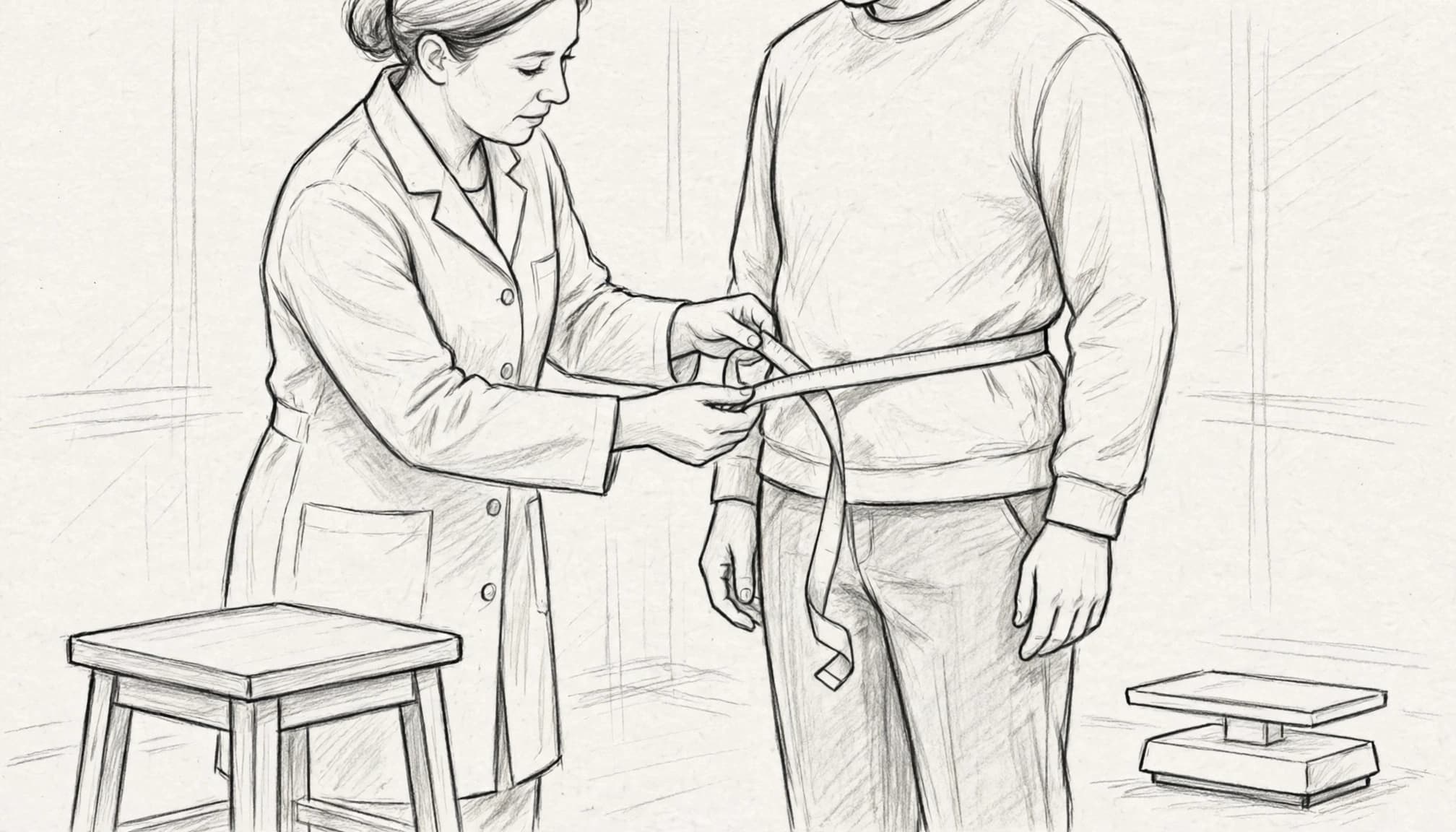
Waist circumference adds information beyond weight
Waist size helps assess abdominal obesity, including fat around internal organs that BMI may not reveal.
For the NHLBI approach, the tape sits horizontally around the abdomen at the top of the hip bones. It should fit snugly without compressing bare skin. The reading follows a normal breath out.
Ancestry matters because metabolic risk can appear at smaller waist sizes. For some Asian populations, clinicians use approximately 90 cm for men and 80 cm for women.
The blood pressure cutoff needs careful reading
The metabolic syndrome criterion is 130 systolic or 85 diastolic, not necessarily both. The upper number measures pressure during a heartbeat; the lower number measures pressure between beats.
Some patient resources, including Johns Hopkins, use 130/80 mmHg. That differs from the traditional NHLBI/AHA syndrome threshold and overlaps with broader hypertension guidance.
A clinician interprets the framework alongside repeated readings and medication history. One elevated measurement after rushing to an appointment doesn't usually establish persistent high blood pressure.
Why the diagnosis matters, even without symptoms
The NHLBI estimates that about one in three US adults have metabolic syndrome. The estimate highlights the importance of prevention, but it shouldn't be assumed to describe the UAE population.
Insulin resistance often connects the findings
Insulin is a hormone that helps glucose enter cells. With insulin resistance, muscle, fat and liver cells respond less effectively.
The pancreas initially produces extra insulin to compensate. Over time, it may struggle to keep up, allowing blood glucose to rise.
This process often accompanies abdominal fat, high triglycerides and low HDL. However, you don't need an insulin test to meet the five clinical criteria.
Risk depends on more than body size
The NHLBI's risk-factor guidance includes excess weight, inactivity and inherited susceptibility. Older age, smoking, poor sleep and diets high in excess calories also matter.
Sleep apnea, polycystic ovary syndrome and fatty liver disease can accompany insulin resistance. Family history of type 2 diabetes adds useful context for overall risks of cardiovascular disease and stroke.
Risk also varies across populations. NHLBI reports that African American women are about 60% more likely than African American men to have metabolic syndrome. These population differences don't determine an individual's diagnosis.
What screening and follow-up usually involve

There isn't one laboratory test that diagnoses the whole syndrome. Your clinician combines an examination with blood results and your medical history.
Before and during the assessment
Expect questions about medicines, smoking, activity, sleep and family history. Bring earlier laboratory reports and any home blood pressure readings.
A fasting glucose test usually requires at least eight hours without calories. Water is generally allowed. If you take diabetes medication, arrange a fasting-day medication plan with your clinician rather than changing doses yourself.
Bloodwork usually includes glucose and a lipid profile. HbA1c, which reflects average glucose over roughly two to three months, may add context but isn't the fasting-glucose criterion.
For clinician-directed bloodwork, our insulin resistance checkup includes fasting glucose, HbA1c and a lipid profile. These results still need assessment alongside waist size, blood pressure and medical history.
After the first results
Clinicians may repeat borderline or unexpected results before deciding what they mean. Illness, recent meals and measurement conditions can affect some readings.
There isn't one retesting schedule for everyone. Elevated blood pressure or medication changes may need earlier review, while glucose and lipid follow-up depends on the findings and treatment plan.
Keep dated results together so trends remain visible. Screening supports early detection, but it doesn't replace a physician's examination or interpretation.
Lifestyle changes that improve the numbers

For adults carrying excess weight, losing 5% to 10% of starting weight can improve insulin resistance and blood pressure. However, physical activity and food quality matter even before substantial weight loss occurs.
Build activity around a manageable week
If you're inactive, walking is a manageable form of exercise, and 30 minutes on a few days each week is a reasonable start. Shorter walks also count, so build gradually rather than forcing a difficult first week.
Work toward at least 150 minutes of moderate aerobic activity weekly. Brisk walking for 30 minutes on five days meets that target.
The US physical activity guidelines also recommend muscle-strengthening activity on at least two days weekly. During moderate activity, you can talk but usually can't sing comfortably.
Choose an eating pattern you can maintain
A Mediterranean-style pattern is a healthy diet that emphasizes vegetables, legumes, whole grains, nuts, olive oil and fish. Replace sugary drinks and frequent refined snacks with water and less processed foods.
For a 2,000-calorie pattern, the NHLBI's heart-healthy eating plan includes 2.5 cups of vegetables and 2 cups of fruit daily. Your calorie needs may differ.
Adding spinach or other vegetables to meals improves their nutritional quality. However, no single food combination replaces attention to portions, overall diet or prescribed treatment.
When medicines or weight-management treatment help
Lifestyle changes remain central, but some people also need medication. The NHLBI guidance focuses on reducing the risk of heart disease, cardiovascular disease and stroke, and preventing or managing type 2 diabetes.
Clinicians may prescribe blood pressure medicines, statins to lower LDL cholesterol, or medication for elevated triglycerides. Glucose-lowering medication depends on whether you have prediabetes, diabetes or another relevant condition.
Although LDL cholesterol isn't one of the five syndrome criteria, it remains important when assessing cardiovascular risk. Low HDL cholesterol also prompts broader risk management rather than automatically requiring a medicine to raise HDL.
For eligible adults with overweight or obesity, medicines such as semaglutide or tirzepatide may support weight management. Metabolic syndrome alone doesn't automatically make someone eligible.
Metabolic surgery is another option for selected patients with obesity. Studies of gastric bypass have found improvements in weight, blood pressure and cholesterol at one year. Surgery requires an individual assessment and long-term nutritional monitoring.
Supplements such as garlic, turmeric or red yeast rice aren't substitutes for these treatments. Some can interact with medicines or cause adverse effects.
Frequently asked questions
What are the five symptoms of metabolic syndrome?
The five diagnostic findings aren't five noticeable symptoms. High triglycerides, low HDL and high blood pressure often cause no symptoms.
A larger waist may be visible. Insulin resistance can sometimes cause dark, velvety skin patches, often around the neck or armpits.
Markedly elevated glucose may cause thirst or frequent urination. These symptoms deserve medical assessment, but their absence doesn't rule out metabolic syndrome.
Can metabolic syndrome go away?
Yes, improvements can reduce the number of criteria below three. However, that doesn't erase your health history or mean you should stop medication without clinical advice.
Metabolic syndrome is also different from the broader term "metabolic disease," which includes conditions such as diabetes. Your progress should reflect individual measurements and overall cardiovascular risk, alongside changes in weight.
Focus on the pattern and your next assessment
Metabolic syndrome brings several measurable risks together. The diagnosis matters because it can identify a need for treatment before symptoms appear.
Ask your clinician which criteria you meet and what follow-up each finding needs. Tracking the individual numbers gives you a clearer picture of progress than watching body weight alone.