


People comparing home blood testing services in the UAE can expect a nurse or phlebotomist to visit after booking, collect a sample and send it to a laboratory. Results are then delivered digitally.
The main advantage is convenience, especially when travelling to a clinic is difficult. Preparation, availability, costs and reporting times vary by provider, test and location, so start by choosing the right tests.
Key takeaways
-
Home collection usually means a professional blood draw followed by laboratory testing.
-
Preparation depends on the tests ordered, and medication instructions should come from your clinician.
-
Collection speed and result turnaround are separate timings.
Booking a home blood test in the UAE
To arrange a blood test at home, follow these four booking steps:
-
Select a package or create a custom selection. Upload your doctor's referral if you have one.
-
Add the details of the person having the tests.
-
Choose a home or center visit, then select your preferred schedule.
-
Complete payment and receive phone and email notifications.
We offer home sample collection across all emirates, with in-center appointments at our Dubai Investment Park clinic. The confirmation provides the appointment details; preparation requirements depend on the selected tests.
A search for blood test Dubai options can show providers advertising office and hotel visits. Pegasus Healthcare lists Downtown Dubai, Business Bay, Dubai Marina and Jumeirah. Confirm current coverage, availability and fees directly with the provider.
Arrival claims vary. Zaincura advertises express collection within 30 minutes, subject to availability. Vesta Care says a nurse arrives within 30 to 45 minutes. These refer to collection arrival, not completed laboratory results.
What happens during the home visit?
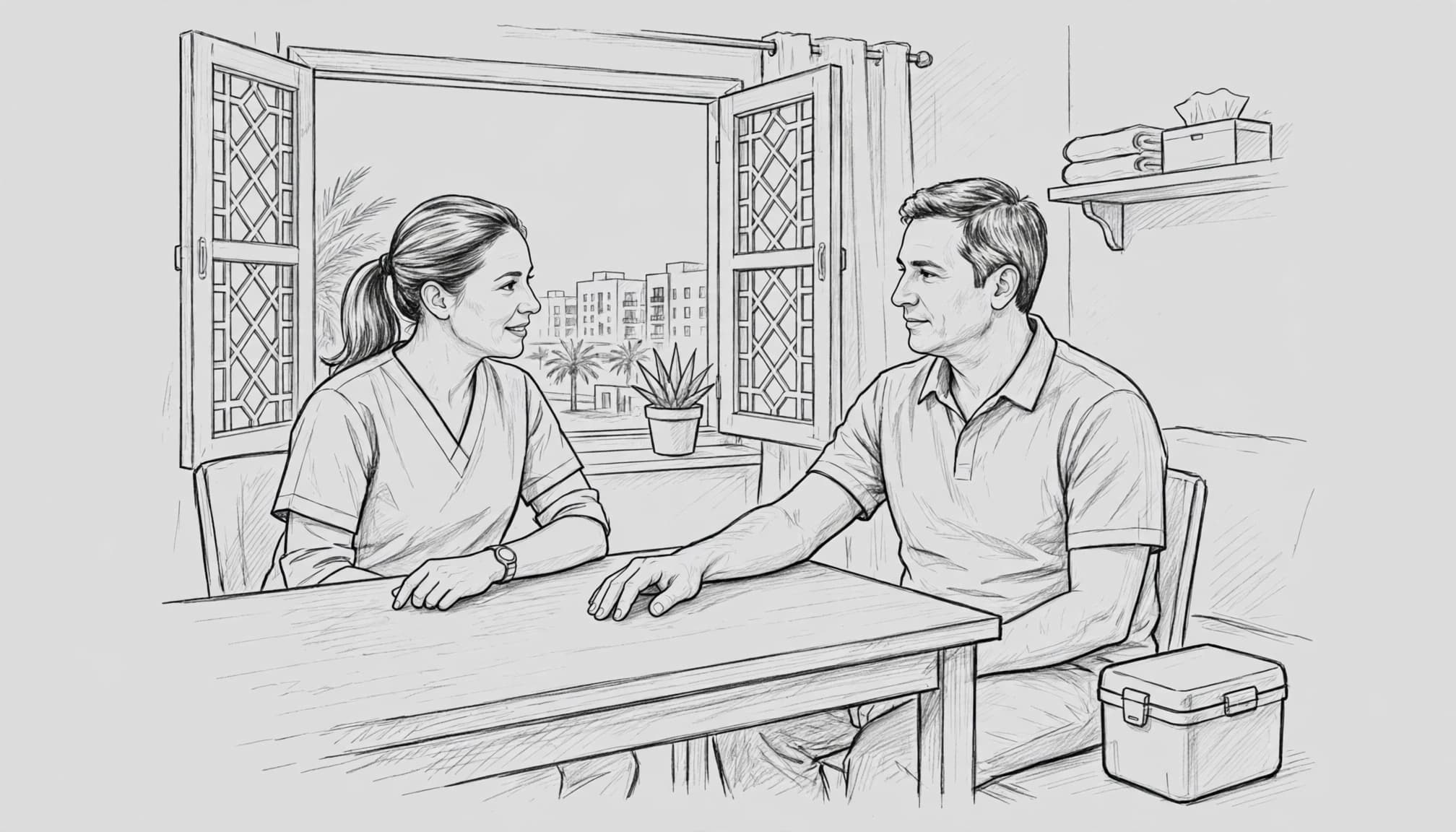
Identity, consent and preparation
The collector reviews the requested tests, confirms your identity and explains the procedure before obtaining consent. Have your photo ID available.
Expect questions about fasting, medicines, allergies and previous fainting during blood draws. Mention anything that could affect collection, including blood thinners or difficulty finding a vein.
A clean surface and comfortable chair help the visit proceed safely. Your arm should be supported during collection.
Collection, labelling and aftercare
The collector cleans the skin and uses a sterile, single-use needle to draw blood into the required tubes. Several tubes may be needed because different tests require different sample types.
Samples are labelled with identifiers linked to your request. After collection, the collector applies a dressing and gives aftercare instructions.
Keep pressure on the puncture site as directed. Tell the collector immediately if you feel dizzy or unwell. Persistent bleeding, increasing swelling or severe pain needs medical attention.
Which blood tests are available at home?
Home collection supports many routine tests, although some investigations require an on-site appointment. Alpha Medical Laboratory advertises over 10,000 laboratory tests. Vesta Care lists over 1,900 tests through Intel-Lab.
Blood counts, cholesterol and organ function
A complete blood count, or CBC, measures red cells, white cells and platelets. It helps clinicians investigate concerns such as anaemia and infection.
A lipid profile measures cholesterol and triglycerides for cardiovascular risk assessment. Liver and kidney function tests use different markers. Liver panels measure enzymes and bilirubin, while kidney panels commonly include creatinine and urea to assess kidney function.
Blood sugar, thyroid and vitamins
HbA1c reflects average blood glucose over approximately two to three months. Fasting glucose measures blood sugar at the time of collection.
A thyroid test commonly starts with thyroid-stimulating hormone, or TSH; additional hormones depend on the clinical question. Vitamin D and B12 tests measure their respective levels.
Our nutrient and vitamin blood tests include options for assessing these nutrients.
Preparing for your blood test
Fasting depends on the ordered tests
When fasting is required, the usual window is 8 to 12 hours. Follow the ordering clinician's instructions for your particular test.
MedlinePlus fasting guidance explains that plain water is generally allowed. Coffee, tea, juice and other drinks aren't substitutes for water during the required period without food.
Pegasus Healthcare notes that glucose tests and lipid profiles may require you to avoid food, while CBC, vitamin D and HbA1c generally don't. Lipid testing can also be ordered without food in some circumstances.
A combined package may still require fasting even when one component doesn't.
Medicines and other preparation
Don't stop prescribed medicine or change its timing without your clinician's advice. This is especially important for insulin and other diabetes medicines when you need to avoid food.
Share your medication and supplement list, including biotin, which can interfere with some laboratory tests. Hormone tests may also have time-of-day requirements.
Drink water normally unless you have a fluid restriction. If you've eaten when these instructions apply, tell the collector before the draw rather than withholding that information.
How samples reach the laboratory
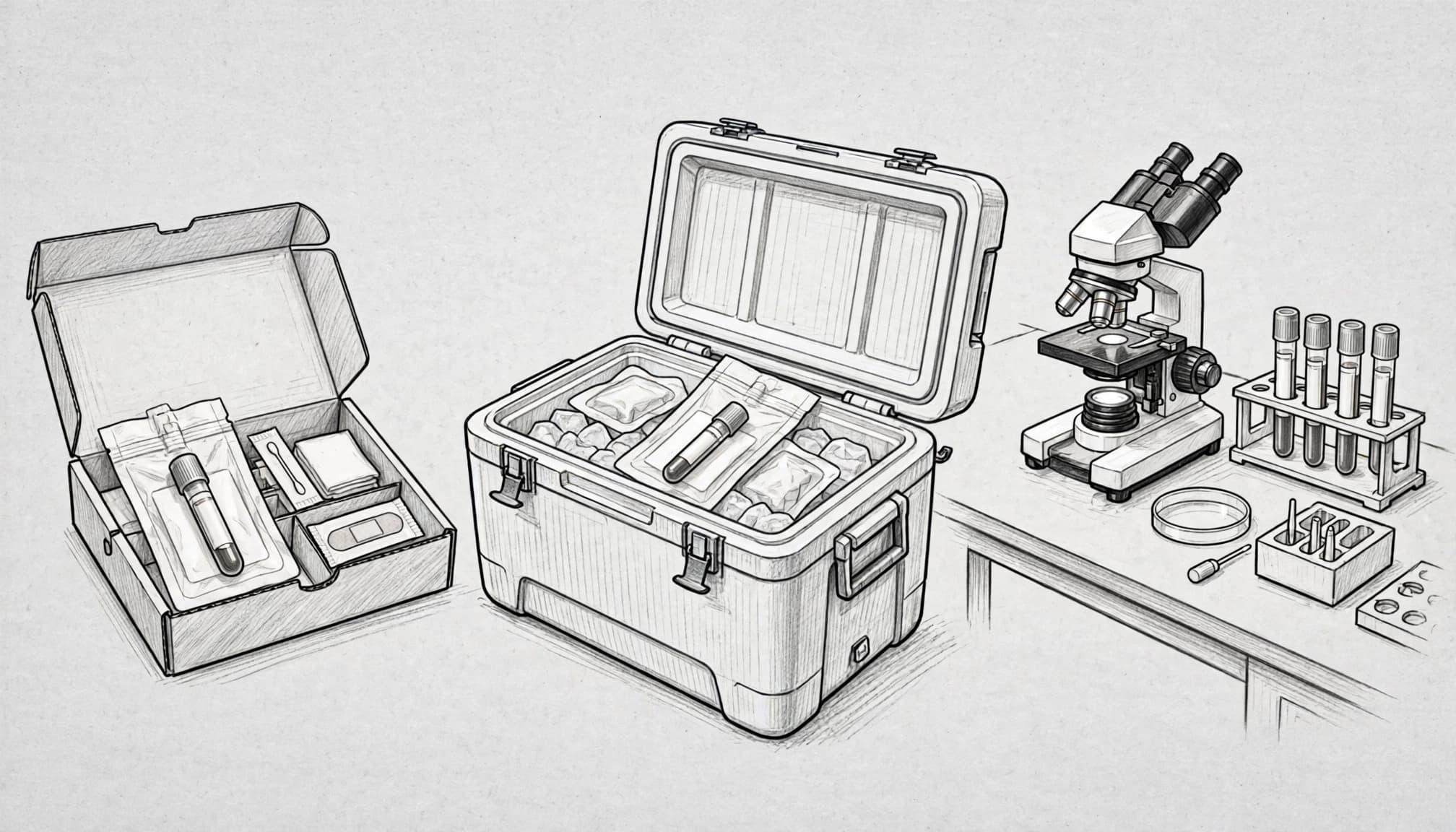
After collection, samples travel in protective packaging under the conditions required for each test. Temperature control, transport time and correct tube handling all affect sample quality.
The EIAC medical laboratory requirements cover collection instructions, identification and handling. They require at least two specimen identifiers matching the request form.
At the laboratory, staff register the samples and assess their suitability before testing. An unsuitable sample, such as one damaged during collection or transport, may require another draw.
When arranging a lab test at home, confirm whether the provider uses its own laboratory or a partner. The testing facility is responsible for analysis and reporting.
How long do home blood test results take?
Advertised reporting times differ
Providers advertise timelines that include same-day results and 24-48 hours for many routine tests, but actual timing varies.
<table><thead><tr><th>Provider</th><th>Advertised result timing</th></tr></thead><tbody><tr><td>Alpha Medical Laboratory</td><td>1 to 2 hours for the majority of tests</td></tr><tr><td>Zaincura</td><td>Typically 4 to 8 hours for routine tests after laboratory receipt; 24 to 48 hours for specialized tests</td></tr><tr><td>Valeo Health</td><td>24 to 48 hours</td></tr><tr><td>American Wellness Center</td><td>24 to 48 hours</td></tr><tr><td>Vesta Care</td><td>Same-day options or 24 to 48 hours</td></tr></tbody></table>The starting point matters. A turnaround measured after laboratory receipt excludes the time between booking, collection and delivery.
Specialized testing can take longer than these routine estimates. Our 172-test Full Health Checkup lists approximately five days for results.
Receiving and understanding your report
Results usually arrive through a secure portal, app or email, depending on the provider. Valeo Health and American Wellness Center advertise digital delivery within their stated reporting windows.
If your provider supplies a smart report, its flags or presentation don't establish a diagnosis. A qualified healthcare professional should interpret it alongside your symptoms, medical history, medicines and previous measurements.
If the laboratory communicates an urgent result, follow its instructions promptly rather than waiting for a routine appointment.
Home blood test costs, insurance and payment
There isn't one standard UAE price. The price and inclusions of a wellness package vary by tests, package size, collection location and whether the visit fee is included.
These advertised prices show how widely packages differ.
<table><thead><tr><th>Package</th><th align="right">Advertised price</th></tr></thead><tbody><tr><td>Our Bronze Health Checkup, 63 listed parameters</td><td align="right">AED 149</td></tr><tr><td>Our Full Health Checkup, 172 listed parameters</td><td align="right">AED 2,399</td></tr><tr><td>Vesta Care diabetes profile</td><td align="right">From AED 149</td></tr><tr><td>Vesta Care basic wellness panel</td><td align="right">From AED 159</td></tr></tbody></table>Our Bronze Health Checkup lists results in about one day. The Full Health Checkup includes blood, urine and stool testing, so these packages aren't directly equivalent. A health screening package's listed parameter count can include individual measurements within a panel. A CBC alone may contribute many listed parameters.
Insurance arrangements also differ. Vesta Care states that it's a registered ENAYA provider and manages pre-authorization and cashless treatment. Coverage still depends on the policy and authorized service.
Zaincura lists cash, card, digital payments and Tabby payment across four instalments, with no insurance required. Its payment options don't establish insurance coverage.
Licensing and laboratory accreditation
Professional licensing in Dubai
A phlebotomist is a professional trained to collect blood. Alpha Medical Laboratory states that its phlebotomists are DHA-licensed and registered.
Dubai's DHA professional status service supports searches using a professional's DHA Unique ID or licence number. Records can show licence status, professional title and associated facility.
Registration and an active practice licence are different. DHA registration alone doesn't authorize someone to start practising. Licensing arrangements outside Dubai follow the relevant emirate's authority.
Accreditation belongs to the testing laboratory
EIAC medical laboratory accreditation assesses quality and competence against ISO 15189. It is separate from a collector's professional licence.
Provider references use different editions. Alpha cites ISO 15189:2012, while Vesta Care cites ISO 15189:2022 and DHA audit requirements.
These website references shouldn't be treated as identical claims. Check the testing laboratory's current accreditation and confirm its scope covers the tests requested. If the provider uses a partner, verify that the partner is an accredited laboratory and its scope covers those tests.
Frequently asked questions
Can I test my blood at home myself?
Home sample collection usually means a trained professional draws blood for laboratory analysis. It's different from using a finger-prick glucose meter or another self-testing device.
A home device only measures what it's designed to measure. It can't replace an ordered laboratory panel.
Which full body checkup is best?
The right checkup depends on age, symptoms, medical history and risk factors. A larger test count doesn't automatically mean more useful screening.
A clinician can help select appropriate tests and avoid investigations that aren't relevant to your health needs.
Can home collection replace urgent medical care?
Home blood collection is suitable for scheduled testing, not emergency assessment. Chest pain, severe breathlessness, fainting or other serious symptoms need urgent medical care.
Don't wait for a home appointment or laboratory report when symptoms require immediate assessment.
A clear process, with follow-up that matters
Home blood collection brings the blood draw to your address while laboratory testing follows afterward. The practical details are the chosen tests, preparation instructions, collection appointment and reporting timeline.
Follow your clinician's preparation and medication guidance. Once your report arrives, discuss it with a qualified healthcare professional. Their professional interpretation can help guide an appropriate next step.