


An HbA1c blood test measures your average blood sugar over the past two to three months. It helps identify diabetes and monitor glucose control, even when you feel well.
Because blood sugar can rise without obvious symptoms, your risk factors matter when deciding when to test. For adults in the UAE, the starting point is understanding what the result can show and when another test is needed.
What does an HbA1c blood test measure?
How glucose leaves a record in your blood
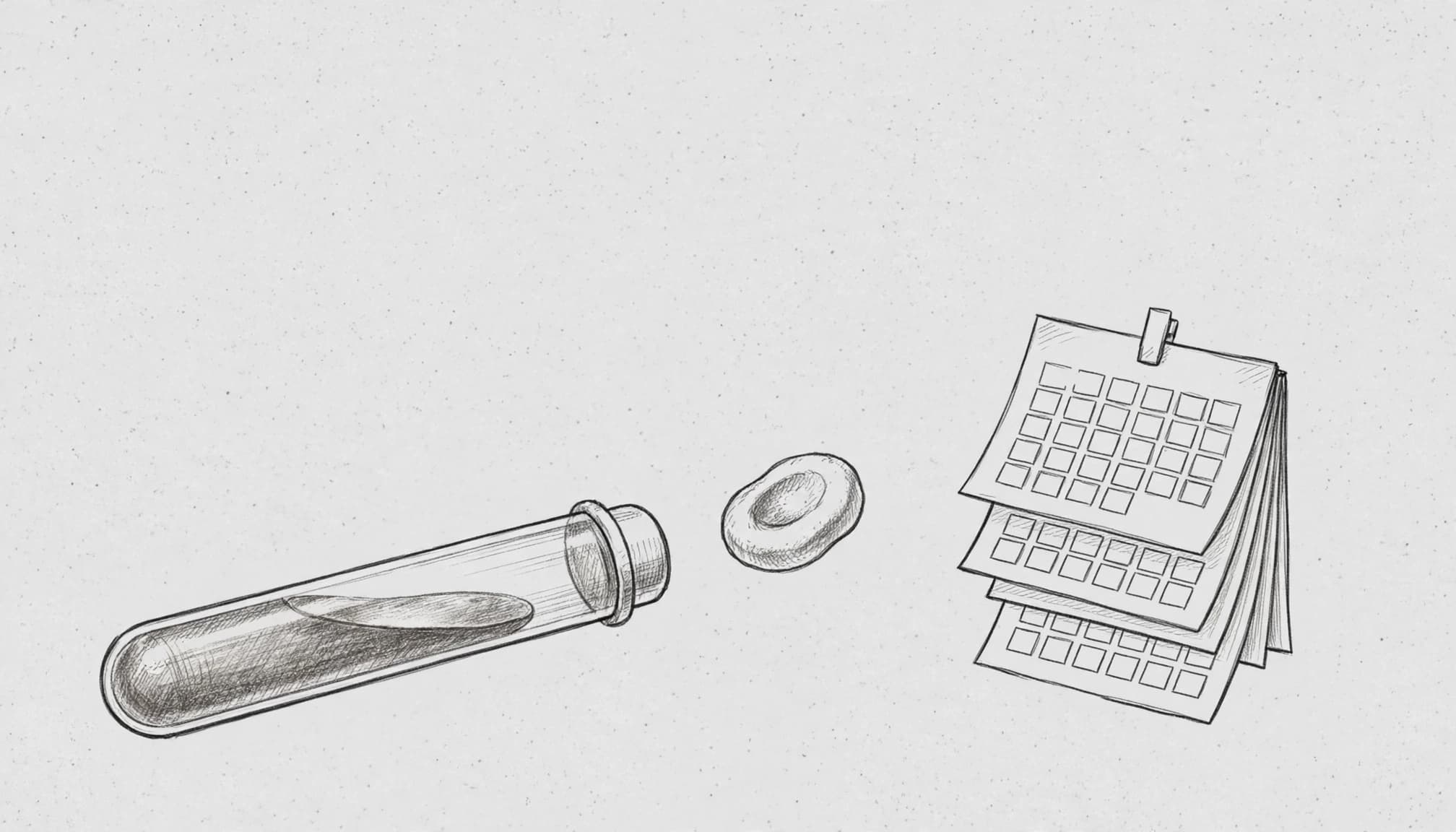
Hemoglobin is the protein inside red blood cells that carries oxygen. Glucose attaches to it as blood circulates. An HbA1c test measures the percentage of hemoglobin with glucose attached.
Because red blood cells remain in circulation for several months, the result reflects longer-term glucose exposure. Recent weeks have more influence than earlier weeks, so it isn't an equally weighted average of every day.
A higher percentage generally means your average blood sugar has been higher during that period.
How it differs from a glucose reading
A fasting blood glucose test measures your blood sugar at the time of collection. Meanwhile, HbA1c provides a longer view.
The tests answer different questions, and clinicians may use both. The ADA's diabetes diagnostic guidance includes HbA1c and glucose-based tests among the available diagnostic methods.
However, an average can hide fluctuations. Someone with high and low glucose readings can have the same HbA1c as someone whose glucose stays relatively steady. Home glucose measurements can reveal patterns that HbA1c alone misses.
Who should consider HbA1c screening in the UAE?
Adults due for screening or with risk factors
Dubai Health Authority's periodic screening guidance includes fasting blood sugar or HbA1c every three years for adults aged 18 and over. It allows annual screening from age 30, with earlier or annual testing when risk factors warrant it.
Risk factors include excess weight, a parent or sibling with diabetes, high blood pressure, and previous gestational diabetes. The ADA Standards of Care also support risk-based screening rather than relying on symptoms alone.
Our insulin resistance checkup includes HbA1c and fasting blood sugar. However, HbA1c alone doesn't diagnose insulin resistance.
People already living with diabetes
If you already have diabetes, HbA1c helps your clinician assess whether your treatment plan is controlling average glucose. Comparing results over time can show how medication changes, eating habits, and physical activity affect your levels.
Your testing schedule depends on your treatment and whether glucose control is stable. Your clinician also sets an individual HbA1c target based on factors such as age, other health conditions, and the risk of low blood sugar.
A diagnostic threshold isn't automatically your treatment target.
What do HbA1c results mean?
A diabetes-range result usually needs confirmation
For adults in whom HbA1c is appropriate, 6.5% or above, equivalent to 48 mmol/mol or above, is a diabetes diagnostic threshold.
The DHA's clinical guidelines advise repeating an abnormal HbA1c to confirm the diagnosis unless symptoms and a plasma glucose result above 200 mg/dL are present.
One result therefore needs clinical interpretation. A clinician considers your symptoms, previous results, and any conditions that affect the test. A result below the diabetes threshold doesn't mean further assessment is unnecessary, particularly if symptoms or other glucose measurements raise concern.
When HbA1c may give an incomplete picture
Conditions affecting hemoglobin or red blood cell turnover can distort HbA1c. These include hemoglobin disorders, hemolytic anemia, recent blood loss, and recent transfusion. Glucose-based testing may be more appropriate in these circumstances.
HbA1c also shouldn't replace prompt glucose testing when symptoms develop quickly or type 1 diabetes is suspected.
A reassuring HbA1c result shouldn't delay assessment of new excessive thirst, frequent urination, or unexplained weight loss.
Pregnancy requires a different screening approach. DoH Abu Dhabi recommends a 75-g oral glucose tolerance test at 24 to 28 weeks if diabetes or high-risk abnormal glucose metabolism hasn't already been identified. HbA1c doesn't replace that screening.
How to prepare for an HbA1c blood test
An HbA1c test on its own doesn't require fasting. You can usually eat and drink normally because one meal doesn't determine the result.
However, a combined blood test appointment may include fasting glucose or other tests that require preparation. Our diabetes checkup includes HbA1c and fasting blood sugar, and requires eight to 12 hours of fasting.
Before collection, tell the clinician about pregnancy, anemia, known hemoglobin conditions, recent transfusions, or significant blood loss. These details can change which test is suitable and how the result should be interpreted.
Don't stop prescribed medicines on your own before testing. If you use insulin or medicines that can cause low blood sugar, get individualized advice before fasting.
We offer home visits across the UAE, so blood collection can fit around your routine. Whether testing happens at home or in a clinic, the result still needs interpretation alongside your health history.
Use HbA1c as Part of Your Diabetes Assessment
An HbA1c blood test provides a useful record of average blood sugar, but symptoms and other glucose tests still matter. Screening is especially relevant when you're due under local guidance or have diabetes risk factors.
The next step depends on your result and clinical circumstances: routine follow-up, confirmation of an abnormal reading, or a different test when HbA1c isn't suitable.