


Your first mammogram in the UAE is a low-dose breast X-ray appointment that usually takes about 30 minutes. For people without symptoms, screening mammography supports early detection. Each breast is briefly compressed to produce clear images, which a radiologist reviews for changes that need attention.
Booking routes, screening eligibility and insurance cover differ between emirates and providers. Choose the right appointment type first, because routine screening and assessment of breast symptoms follow different paths.
What a mammogram can show
Mammography can reveal small masses and calcium deposits before you can feel a lump. However, an image alone doesn't always establish whether a finding is cancer.
Digital mammography and 3-D imaging
Digital mammography uses electronic detectors instead of film, allowing improved images at lower radiation doses. Computer-aided detection highlights possible masses, density changes or calcifications for the radiologist to examine.
Breast tomosynthesis takes images from several angles and reconstructs them into a 3-D image set. Studies show improved detection and fewer callbacks compared with standard 2-D imaging. RadiologyInfo's guide to mammography explains these techniques.
Screening versus diagnostic appointments
Screening mammograms are for people without symptoms. Symptoms or an abnormal screening result may lead to a diagnostic mammogram, often with extra views and ultrasound.
Report a new breast lump, altered breast size or shape, skin dimpling or puckering, nipple discharge, or persistent armpit pain. These changes don't automatically mean cancer, but they need clinical assessment rather than a routine screening booking.
When breast screening starts in the UAE
No single schedule applies to every woman in the UAE. Breast cancer screening recommendations depend on age, medical history and local pathway, and screening supports early detection.
Average-risk screening schedules
King's College Hospital Dubai cites American College of Radiology and National Comprehensive Cancer Network recommendations for an annual mammogram from age 40. This is a cited recommendation, not a universal UAE schedule. In contrast, Abu Dhabi Public Health Centre recommends mammography every two years for average-risk women aged 40 to 75.
Some provider information conflicts. Medcare's page lists annual screening from 45, twice-yearly screening from 55 and no annual mammograms from 71. Twice-yearly screening isn't a standard average-risk schedule, and age 71 isn't a universal stopping point. Use a clinician-agreed plan rather than combining these schedules.
Earlier screening for higher risk
A strong family history, a known inherited mutation or previous chest radiotherapy may justify earlier screening or additional breast MRI.
If inherited risk is a concern, discuss genetic counselling before testing. Our BRCA1 and BRCA2 genetic testing assesses inherited susceptibility; it doesn't diagnose breast cancer or replace mammography.
How to prepare for your appointment
If your breasts become tender around menstruation, aim for the week after your period. Avoid the week before it when possible, but don't delay assessment of a new symptom.
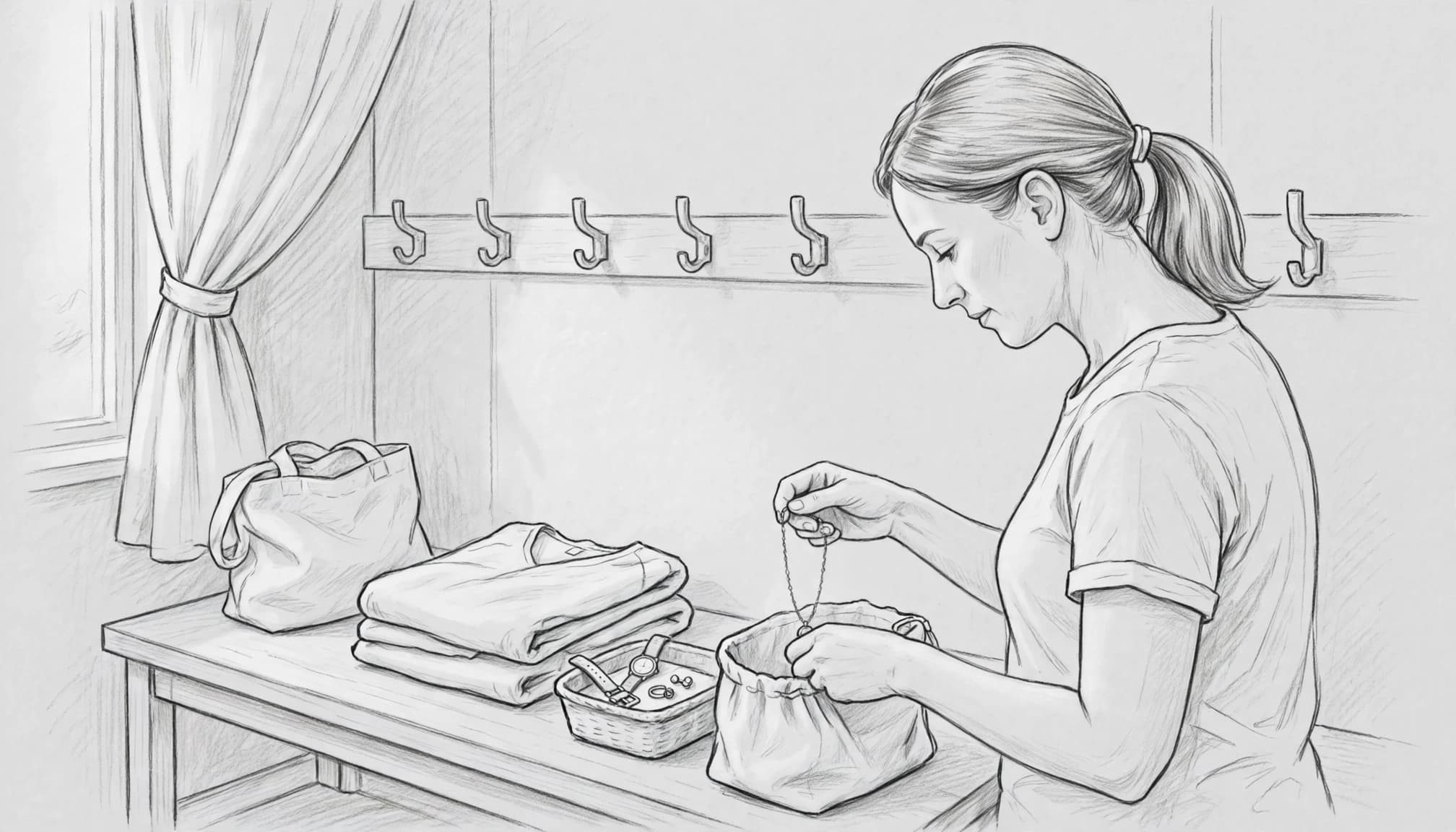
On the day, don't apply deodorant, talcum powder, lotion or cream to your breasts or underarms. Some products leave particles that can resemble calcium spots. The Canadian Cancer Society's mammography preparation guidance explains this restriction.
Bring the documents and information needed for registration and interpretation:
-
Carry your Emirates ID, insurance details and any referral or authorisation documents.
-
Bring previous breast images and reports, including earlier ultrasound studies, if available.
-
Note breast symptoms, previous surgery, implants and relevant family cancer history.
Wear a separate top and bottoms because you'll undress above the waist. Mammography itself doesn't require fasting.
Tell the booking team if you're pregnant, might be pregnant or are breastfeeding. These circumstances need an individual imaging plan, especially when symptoms are present.
What happens during your first mammogram
After registration, you'll change into a gown. The radiographer explains the positioning and places one breast at a time on the machine's support plate.
A clear plastic paddle applies breast compression for several seconds during each exposure. This evens out thickness, spreads overlapping tissue and reduces movement, blur and the X-ray dose needed.
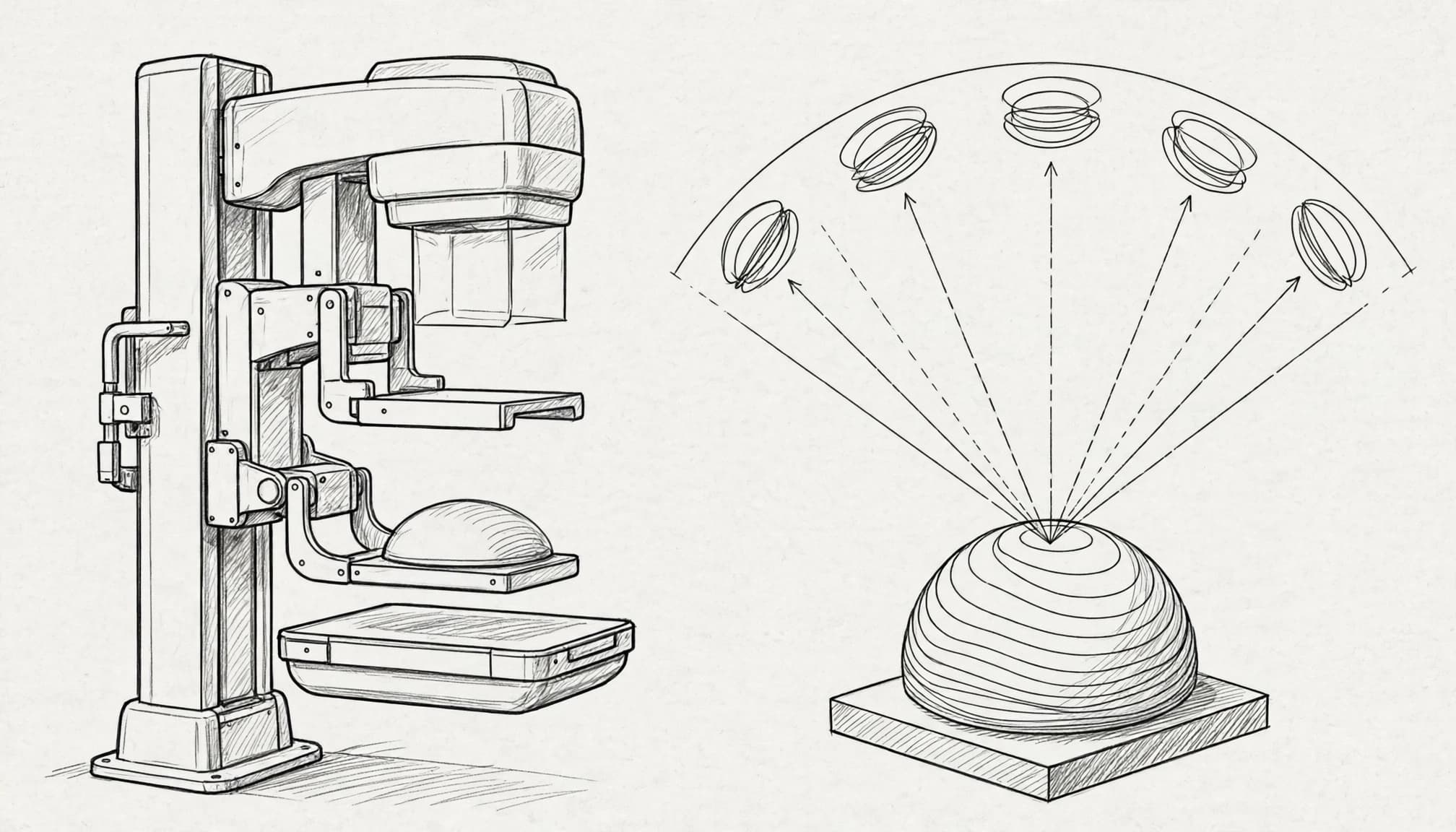
You'll usually have views of each breast from different directions. The full examination takes about 30 minutes, although compression occupies only a small part of that time.
Expect firm pressure, pulling or brief discomfort. Some women find it painful. Tell the radiographer immediately if the pressure is too much so they can adjust the positioning.
You'll need to stay still and may briefly hold your breath. Afterwards, you can usually dress, apply deodorant and return to normal activities.
How results and follow-up work
A radiologist interprets the images after the examination. The radiographer taking the pictures doesn't usually provide the final diagnosis.
Receiving your report
Results may go to your referring clinician, appear in a patient portal or arrive through the imaging service. There isn't a single UAE-wide reporting deadline, so leave with a clear reporting timeframe and contact route.
Reports often use BI-RADS, a standard classification system. BI-RADS 0 means more information is needed; categories 1 and 2 generally mean negative or benign findings. Category 3 commonly leads to short-interval monitoring, while categories 4 and 5 usually require tissue sampling.
If cancer is confirmed, your clinician can arrange a referral to an appropriate breast specialist or oncologist.
If you need more imaging
Further breast imaging may be recommended when the radiologist needs more information.
King's College Hospital Dubai states that 5% to 15% of screening mammograms need additional testing, with most follow-up examinations proving normal.
Extra mammogram views may separate overlapping tissue. Ultrasound can examine a particular finding or supplement imaging of dense breasts. Breast MRI is more often used in higher-risk situations or to answer a specific clinical question.
If imaging remains suspicious, an image-guided needle biopsy collects tissue for laboratory examination. A small marker may identify the sampled area for future imaging. Mediclinic describes these biopsy and marker-placement services across its breast-imaging pathway.
A callback means the radiologist needs more information. It doesn't, by itself, mean cancer is present.
Understanding false positives and missed cancers
A false positive means imaging raises concern, but further assessment finds no cancer. It can cause anxiety and sometimes leads to a biopsy.
King's College Hospital Dubai gives a cumulative estimate for women screened annually between ages 40 and 49: about a 30% chance of at least one false-positive mammogram and a 7% to 8% chance of biopsy during that decade. These aren't risks for each individual appointment.
Breast density can make mammograms harder to interpret because dense tissue appears white, like many cancers. It also increases breast cancer risk.
Implants can obscure tissue, so tell the service about them before your appointment. Extra positioning views may be necessary.
Mammography uses a small radiation dose. For women who meet screening criteria, its expected early-detection benefit generally outweighs that risk. Report persistent or new symptoms even after a normal result.
Booking and paying for a mammogram in the UAE
Routine screening may start with a GP appointment, a provider's screening programme or an imaging booking supported by a medical order. Symptoms need a diagnostic pathway.
Booking, referrals and insurance
Mediclinic's screening route includes a virtual Family Medicine consultation, followed by a mammogram order and appointment booking. Eligible patients can book through 800 2033.
Its programme targets women aged 40 or older without breast symptoms who haven't had mammography within 12 months. Pregnancy, breastfeeding or existing breast problems require a different assessment route. Mediclinic provides breast imaging across Dubai, Abu Dhabi and Al Ain.
Insurance coverage depends on your policy, facility network and referral or pre-authorisation requirements. A screening package's eligibility rules aren't the same as national screening guidance.
Private prices and package differences
Mediclinic lists AED 375 for mammography, AED 350 for breast ultrasound and AED 725 for both, including physician consultation.
Medcare advertises a Sharjah consultation plus ultrasound or mammogram package for AED 350, valid until 30 November 2026. It isn't a combined mammogram-and-ultrasound price.
Our women's MRI screening package costs AED 3,249 and includes mammography, breast ultrasound and broader investigations in Garhoud, Dubai. Scan slots remain subject to availability.
A broader package isn't necessary for every first mammogram. Whole-body MRI and cancer-marker blood tests don't replace a breast-specific screening plan.
Key takeaways before you attend
A first mammogram involves brief compression, followed by specialist image interpretation. Preparing your documents and avoiding underarm products helps the appointment run smoothly.
The most important distinction is whether you have symptoms. Routine screening suits symptom-free women; breast changes need clinical assessment and an appropriate diagnostic referral.
Frequently asked questions
Can I get a free mammogram in the UAE?
Some campaigns and public programmes offer free screening to eligible women. Access depends on the programme, location and eligibility criteria; it isn't a universal entitlement across all seven emirates. An October campaign also shouldn't be assumed to continue throughout the year.
Does a first mammogram need extra preparation?
The preparation is largely the same as for later mammograms. However, your first appointment establishes baseline images, so previous breast ultrasound reports and a clear medical history are useful. The National Breast Cancer Foundation's first mammogram preparation advice offers additional practical guidance.
Can ultrasound replace my mammogram?
Usually, ultrasound supplements mammography rather than replacing it for routine age-based screening. Mammography can reveal tiny calcium deposits that ultrasound may not show. For younger women or during pregnancy, clinicians may choose ultrasound first when investigating symptoms.
Do cancer-marker blood tests replace breast imaging?
No. Blood tumour-marker tests don't reliably screen symptom-free women for breast cancer. They can't rule out a breast tumour, and normal blood results shouldn't delay assessment of a lump or other breast change.
Leave with a clear follow-up plan
Your first mammogram should end with a clear understanding of how you'll receive the results and who will manage any next steps. Additional imaging often resolves uncertainty without finding cancer.
Choose the appointment type that matches your symptoms and risk. Then follow the radiologist's recommendation, even if you feel well.