


Early sleep apnea symptoms include loud snoring, breathing pauses, nighttime gasping and daytime sleepiness despite enough time in bed. A partner may notice breathing changes before you recognize a problem.
Less obvious clues include morning headaches, dry mouth and difficulty concentrating. These signs don't confirm sleep apnea, but a pattern of disrupted sleep deserves attention. Start by noticing what happens overnight and how you feel the next day.
Key takeaways
-
Repeated breathing pauses or choking during sleep deserve medical attention, even without daytime tiredness.
-
Persistent exhaustion after adequate sleep can point to disrupted breathing, although other conditions can cause similar symptoms.
-
A sleep study or suitable home sleep apnea test confirms the diagnosis. Snoring recordings, questionnaires and routine blood tests cannot confirm it alone.
How sleep apnea differs from ordinary snoring
Snoring happens when relaxed throat tissue partly narrows the upper airway and vibrates as air passes through. Ordinary snoring doesn't necessarily involve repeated breathing interruptions.
Sleep apnea causes breathing to stop and restart during sleep. In obstructive sleep apnea, the most common type, the upper airway repeatedly narrows or becomes blocked.
Central sleep apnea happens when the brain doesn't send the signals needed to breathe. The National Heart, Lung, and Blood Institute explains these two main mechanisms.
You can't reliably distinguish ordinary snoring from apnea by loudness alone. Repeated pauses, gasping and daytime effects raise concern, but testing establishes the diagnosis.
Also, "early signs" don't describe a formal disease stage. Someone with mild symptoms can still have substantial breathing disruption.
Nighttime sleep apnea symptoms to watch for
Because breathing interruptions happen while you're asleep, a partner's observations can be valuable. Ask about patterns rather than whether you snore.
Snoring, breathing pauses and gasping
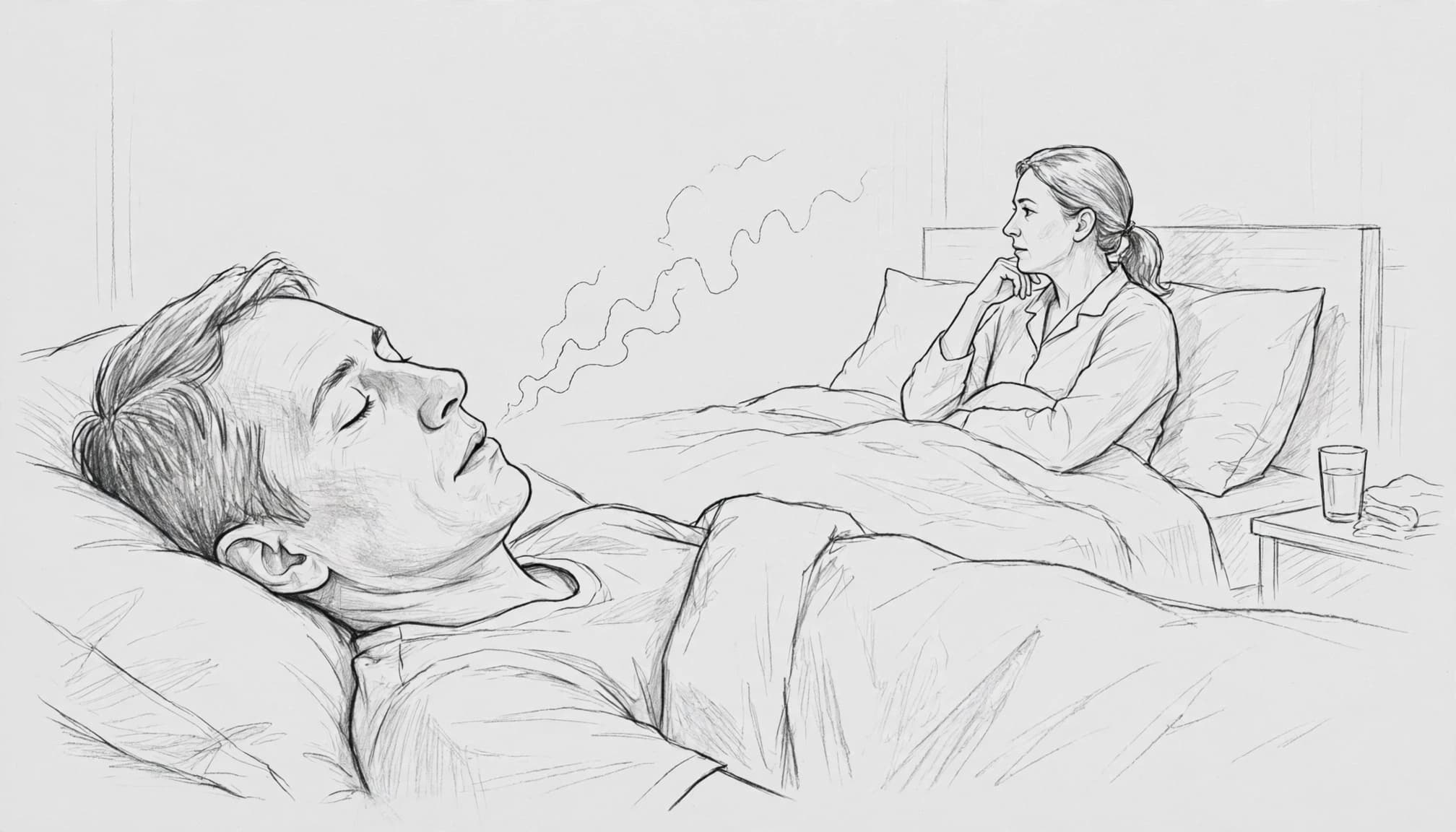
The clearest warning pattern is loud snoring interrupted by pauses in breathing, followed by a snort, choke or gasp. A partner may notice this sequence repeatedly during the night.
However, brief awakenings can be so short that you don't remember them. You might believe you slept continuously while your partner describes frequent breathing changes.
Snoring that disturbs someone else deserves discussion, especially when it accompanies pauses or choking. A short recording may help describe the pattern to a doctor, but it cannot establish a diagnosis.
Less obvious nighttime changes
Other clues include restless sleep, repeated awakenings and getting up to urinate more often than usual. Waking with a dry mouth or sore throat can also occur, particularly with mouth breathing.
Some adults describe difficulty staying asleep rather than obvious breathing trouble. These symptoms have several possible causes, so look for combinations and persistence.
If you sleep alone, unexplained awakenings with choking or a racing heartbeat are worth reporting. You don't need a witness before seeking an assessment.
Daytime signs can look like stress or poor sleep
Sleep apnea repeatedly disrupts restorative sleep. Breathing events may also lower oxygen levels, so spending enough hours in bed doesn't guarantee refreshing sleep.
Sleepiness that affects daily life
Excessive daytime sleepiness means struggling to stay awake, rather than simply feeling low on energy. You may doze during meetings, while watching television or as a passenger.
Poor concentration can show up as missed instructions, slower reactions or difficulty finishing familiar tasks. Irritability may follow because fragmented sleep affects attention and emotional regulation.
These changes can affect work performance and relationships before you recognize a sleep problem. If you become sleepy behind the wheel, stop driving and arrange prompt medical assessment. Coffee doesn't reliably make drowsy driving safe.
Morning headaches, fatigue and mood changes
Sleep-apnea-related headaches often affect both sides of the front of the head. They may feel like pressure on waking, although morning headaches have many other causes.
Persistent daytime fatigue, low mood and forgetfulness can be easier to overlook than loud snoring. Women may report insomnia, fatigue or headaches rather than the classic picture of pronounced sleepiness and disruptive snoring.
A new or severe headache needs assessment on its own merits. Don't assume every morning headache comes from sleep apnea.
Who is more likely to develop sleep apnea?
Obesity and weight gain can increase obstructive sleep apnea risk because tissue around the throat can make breathing more difficult. However, adults at any weight can develop it.
A large neck, family history and enlarged tonsils can also contribute. Enlarged adenoids matter more often in children. The NHLBI's causes and risk factors guidance explains how anatomy and other conditions affect risk.
Sleeping on your back can worsen airway collapse in some people. Alcohol near bedtime may also worsen obstruction, while smoking can contribute to throat irritation.
Risk increases with age. Men develop obstructive sleep apnea more often, and women's risk rises after menopause.
COPD can coexist with obstructive sleep apnea and make nighttime oxygen problems more concerning. It's a related condition rather than the usual cause of breathing obstruction.
Heart failure, previous stroke, neurological disorders and opioid medicines are relevant to central sleep apnea. Tell your doctor about prescribed medicines, but don't stop them without medical advice.
When to arrange a medical evaluation
Book an appointment if someone notices repeated breathing pauses or choking during your sleep. You don't need to wait until several symptoms appear together.
Also discuss waking unrefreshed despite at least seven hours of sleep. Regularly needing nine or more hours to feel rested is worth mentioning, particularly if this represents a change. Sleep duration alone doesn't diagnose apnea.
High blood pressure commonly occurs alongside obstructive sleep apnea. Concern increases when high blood pressure remains difficult to control and you also have snoring or daytime sleepiness.
Bring your usual sleep schedule, medication list and any partner observations. A brief sleep diary can help show whether fatigue persists despite adequate opportunity to sleep.
Feeling only mildly tired doesn't rule out significant sleep apnea. Breathing observations and test results matter more than symptom count alone.
Seek emergency care for severe breathing difficulty while awake, chest pain, fainting or blue lips. These symptoms need immediate assessment rather than a routine sleep appointment.
What happens during sleep apnea testing?
Your doctor will review your symptoms, examine your throat and assess related health conditions. A questionnaire such as STOP-Bang may estimate risk, but it cannot replace diagnostic testing.
An overnight laboratory sleep study
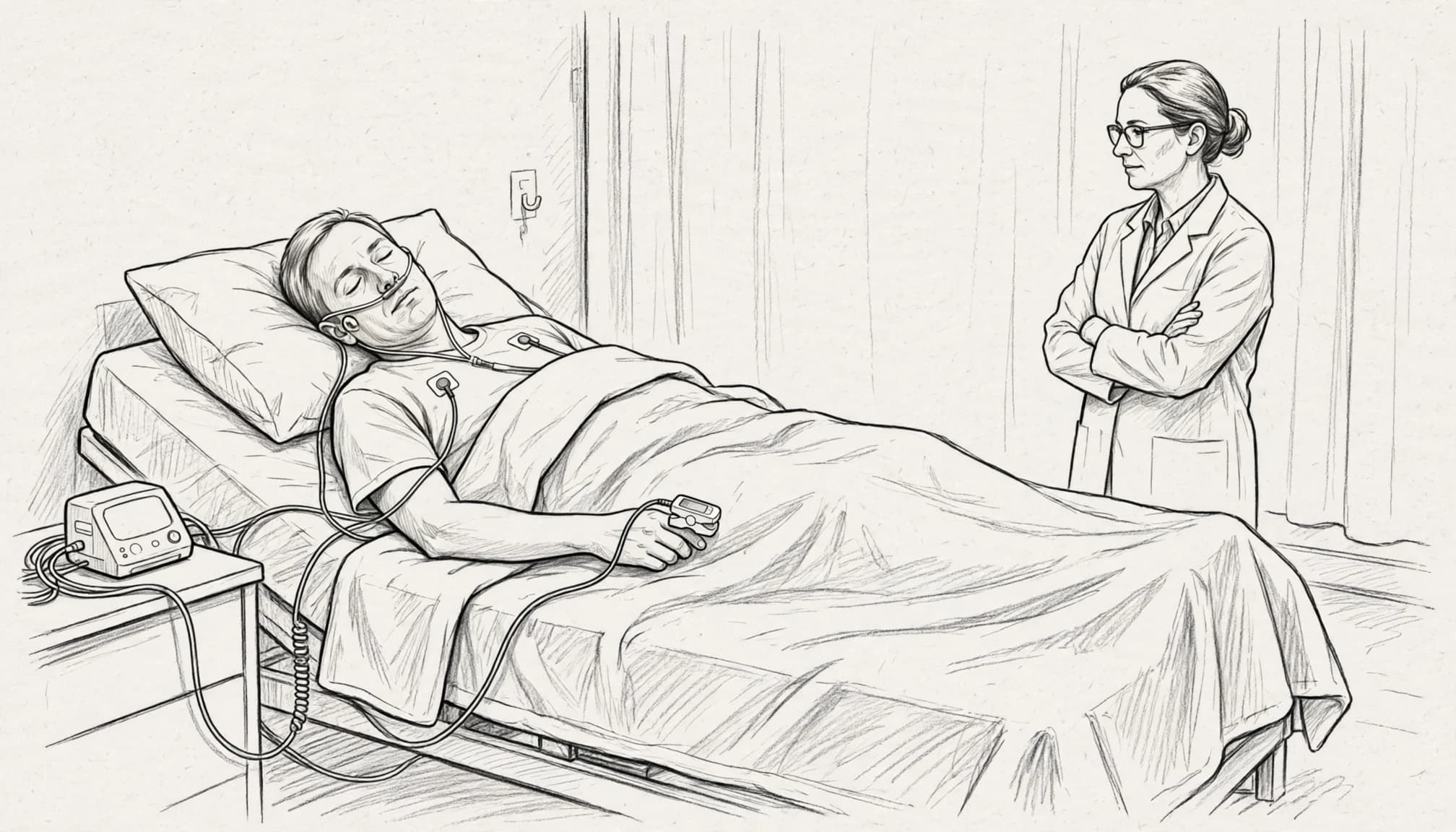
A laboratory study, called polysomnography, records breathing, oxygen levels, heart rhythm and sleep stages. Sensors also measure chest movements and other activity while a technician monitors the recording.
The sensors don't deliver electricity. Although sleeping with them may feel unfamiliar, the recording provides information about what happens overnight.
EEG sensors record brain activity as part of this study. Standalone EEG monitoring, however, doesn't replace a breathing-focused sleep apnea assessment.
A home sleep apnea test
A clinician may recommend home testing for an otherwise uncomplicated adult with suspected obstructive sleep apnea. Equipment usually records airflow, breathing effort, oxygen saturation and pulse or heart-rate information. Full heart-rhythm monitoring depends on the device.
You'll receive instructions for fitting the sensors and returning the equipment. The AASM's home testing guidance describes who may be suitable.
A negative or unclear home result doesn't always exclude apnea. The AASM diagnostic testing guideline recommends laboratory testing when a home test is negative, inconclusive or technically inadequate.
Understanding the results
Laboratory reports commonly use the apnea-hypopnea index, or AHI, which counts breathing interruptions per hour of sleep. Adult categories are mild at 5 to fewer than 15, moderate at 15 to fewer than 30, and severe at 30 or more.
Doctors also consider oxygen changes, symptoms and medical history when interpreting results.
What changes after a diagnosis?
Treatment depends on the apnea type, test findings and your health. CPAP delivers pressurized air through a mask to help keep the throat open during sleep.
Some adults with obstructive sleep apnea may use a custom oral appliance fitted by a qualified dental professional. Selected patients may benefit from other treatments, including surgery.
Weight loss, when appropriate, and regular exercise can help manage obstructive sleep apnea. Side sleeping may reduce events when testing shows that breathing worsens on your back.
However, lifestyle changes don't reliably replace prescribed treatment. Central cases require an approach that addresses the underlying cause and may involve different breathing support.
If CPAP feels uncomfortable, discuss mask fit, dryness or pressure concerns with the treating team. Adjustments can make treatment easier to tolerate. Follow-up also helps establish whether breathing and daytime alertness have improved.
Common questions about sleep apnea
Can you have sleep apnea without snoring?
Yes. The absence of snoring doesn't exclude sleep apnea, including central sleep apnea. Persistent daytime sleepiness, unexplained awakenings or witnessed breathing pauses can still justify evaluation. Likewise, some people with obstructive sleep apnea don't recognize their own snoring.
Can untreated sleep apnea be dangerous?
Untreated sleep apnea can increase cardiovascular risks and the chance of accidents caused by sleepiness. Severe disease is associated with a higher risk of premature death. However, a symptom checklist cannot estimate your personal risk. Proper testing and treatment provide a clearer basis for managing it.
Take persistent breathing changes seriously
The strongest warning pattern combines disrupted nighttime breathing with unrefreshing sleep or daytime difficulties. You don't need every symptom, and a partner's observations can help identify changes you cannot notice yourself.
Arrange a medical assessment for repeated pauses, choking or persistent sleepiness. Diagnostic testing can distinguish sleep apnea from ordinary snoring and guide treatment suited to your needs.