


Yes, high uric acid can exist without a gout attack, and most people with an elevated result feel well. Clinicians call this asymptomatic hyperuricemia, meaning raised blood uric acid without gout attacks.
An abnormal result doesn't automatically mean you need medication. The next step is to understand the number alongside your kidney function, medicines and symptoms.
Key takeaways
-
A raised uric acid result alone doesn't diagnose gout or predict that you'll develop it.
-
Treatment decisions depend on symptoms, kidney health and medical history, rather than one blood test.
Why high uric acid doesn't always cause gout
Uric acid forms when your body breaks down purines, substances found naturally in your cells and foods, including many high-protein foods. Hyperuricemia develops when production exceeds removal, usually through the kidneys.
Gout occurs when urate crystals trigger joint inflammation. However, crystals may never form, or deposits may remain without attacks. The NIAMS explanation of gout describes this symptom-free stage.
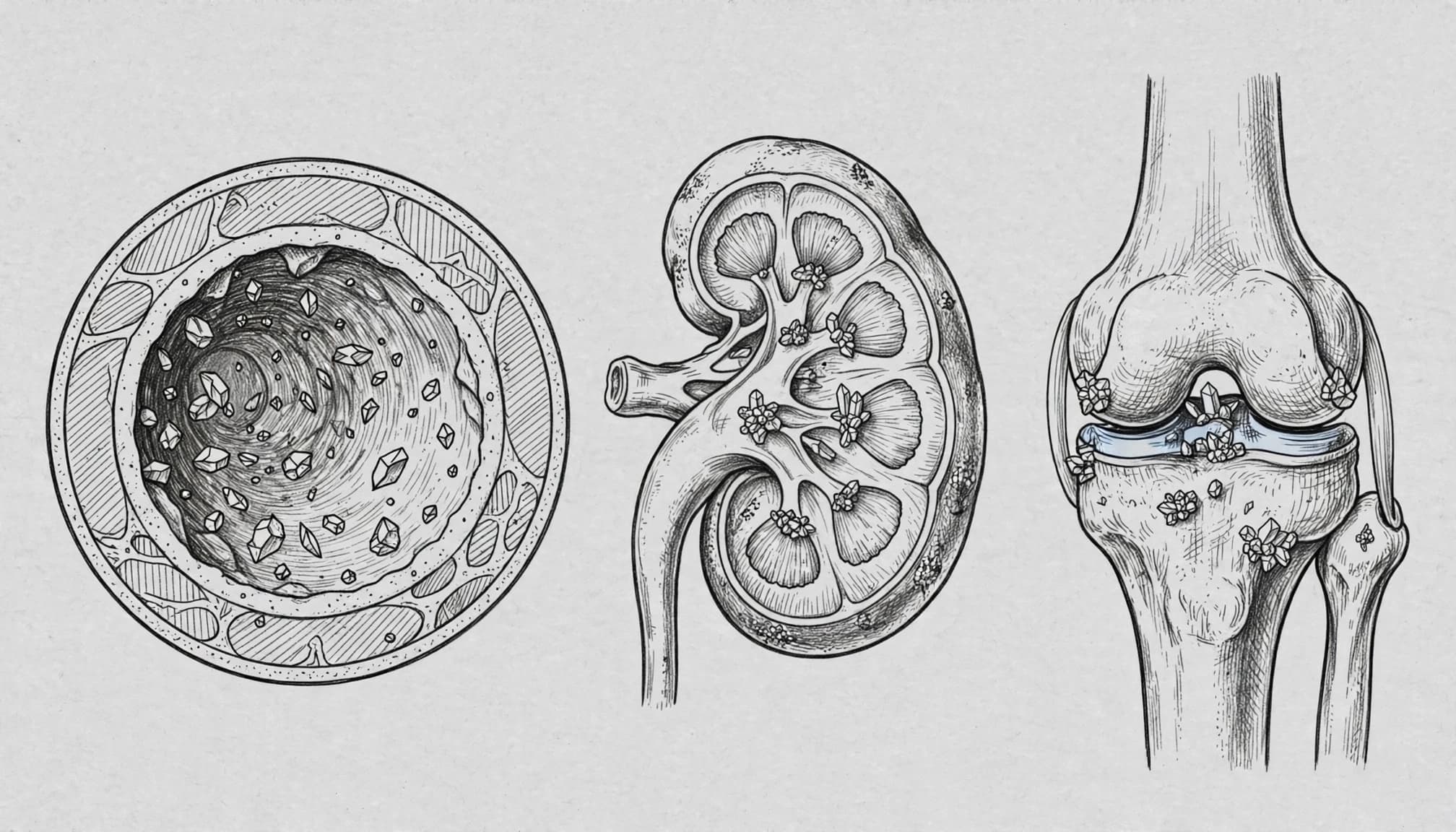
Gout causes sudden, severe joint pain, swelling and redness, commonly in the big toe, ankle or knee. It's more common in men aged 40 to 60.
How clinicians interpret your test result
Blood and urine testing
A blood sample measures serum uric acid. Repeat testing can establish whether uric acid levels remain elevated, while creatinine and estimated glomerular filtration rate (eGFR) assess kidney function. Sometimes, a 24-hour urine collection measures uric acid excretion.
Our Silver Health Checkup includes uric acid, creatinine and eGFR testing. These results support medical assessment; they don't replace an examination.
Why reference ranges differ
Published ranges vary, so a result within the laboratory's normal range doesn't necessarily meet a treatment threshold.
These figures illustrate the differences:
<table><thead><tr><th>Measure</th><th>Values in mg/dL</th></tr></thead><tbody><tr><td>Common clinical upper limits</td><td>Below 7.0 for men; below 6.0 for women</td></tr><tr><td>Approximate urate saturation threshold</td><td>6.8</td></tr><tr><td>Some published laboratory intervals</td><td>4.0 to 8.5 for men; 2.7 to 7.3 for women</td></tr></tbody></table>The clinical definition of hyperuricemia commonly uses sex-specific cutoffs.
A result inside a wide laboratory interval can still exceed the concentration at which urate crystals may form.
Common causes and health concerns
Why levels rise
Impaired kidney excretion, increased uric acid production, or both can raise uric acid. Advanced kidney disease or kidney failure can impair excretion. Genetics, obesity and dehydration also contribute. Less commonly, rapid cell breakdown, including during some cancer treatments, increases production.
Thiazide diuretics, loop diuretics, low-dose aspirin and niacin can also raise levels. Don't stop prescribed medicines or self-medicate; a clinician should review their benefits and alternatives.
Kidney stones and cardiovascular health
Uric acid stones can form when urine is too acidic, sometimes alongside excess urinary uric acid. A stone may cause severe side or lower-back pain and blood in urine.
Seek prompt assessment for these symptoms. Fever, vomiting or difficulty passing urine needs urgent care. Likewise, a first hot, swollen joint needs assessment because infection can resemble gout.
Elevated urate is associated with cardiovascular risk, particularly alongside hypertension or diabetes, but it's not established as a cardiovascular risk factor or as a cause of heart disease. The association doesn't prove that lowering urate prevents heart attacks.
When treatment or lifestyle changes are appropriate
The American College of Rheumatology guideline generally recommends against starting urate-lowering medicine for asymptomatic hyperuricemia. Clinicians consider repeated results, previous attacks, stone history, kidney function and medicines.
For established gout, recurrent attacks, urate lumps called tophi, or joint damage may justify long-term treatment. Allopurinol is usually first-line; febuxostat is another option. Treatment commonly targets urate below 6 mg/dL. Kidney stones may require a separate prevention plan.
Lifestyle changes help whether or not medication is appropriate. Limit organ meats such as liver, kidney and sweetbreads. Other purine-rich foods to moderate include anchovies, sardines, mackerel, herring, scallops, mussels and shrimp.
Beer and spirits are especially problematic because alcoholic beverages reduce kidney urate removal. Fructose in sugar-sweetened beverages and high-fructose corn syrup increases uric acid production.
Low-fat milk and yogurt may help lower levels. Legumes such as beans and lentils, along with vegetables, generally don't need blanket restrictions simply because they contain purines. Protein content alone doesn't determine a food's effect.
Aim for gradual weight loss if needed, exercise regularly and avoid crash diets. Drink water throughout the day. Although 8 to 10 glasses is a common suggestion, fluid needs vary with heat, activity and medical conditions. Follow prescribed fluid restrictions for heart or kidney disease.
Frequently asked questions
Can gout occur with a normal uric acid result?
Yes. Blood urate can fall during an acute attack. If a gout flare is suspected, clinicians may repeat the blood test after the flare settles or examine joint fluid for crystals.
What uric acid level is dangerous?
There's no single emergency cutoff for everyone. Persistently higher levels increase risk, but symptoms, kidney function and the clinical situation determine urgency and treatment.
Which vitamin lowers uric acid?
No vitamin "kills" uric acid. Vitamin C may modestly lower levels, but supplements aren't recommended as gout treatment. Cherries and coffee also don't replace indicated medication.
Your result needs context, not an automatic prescription
High uric acid can remain symptom-free without progressing to gout. The most useful response is to assess overall risk, rather than treat one number in isolation.
Discuss the result alongside your kidney tests and medication list. Seek prompt care if joint swelling, severe side pain or blood in urine develops.