


Yes, dehydration can affect blood test results by reducing the water in your bloodstream and concentrating some measured substances. It can raise urea and creatinine, lower calculated eGFR, and increase blood cell or protein readings.
These changes may be temporary, but you shouldn't dismiss an abnormal result as dehydration without medical assessment. Knowing which markers can shift helps you prepare and recognize when follow-up is needed.
Which blood markers can dehydration change?
Dehydration affects both blood concentration and kidney function. However, it doesn't change every marker equally.
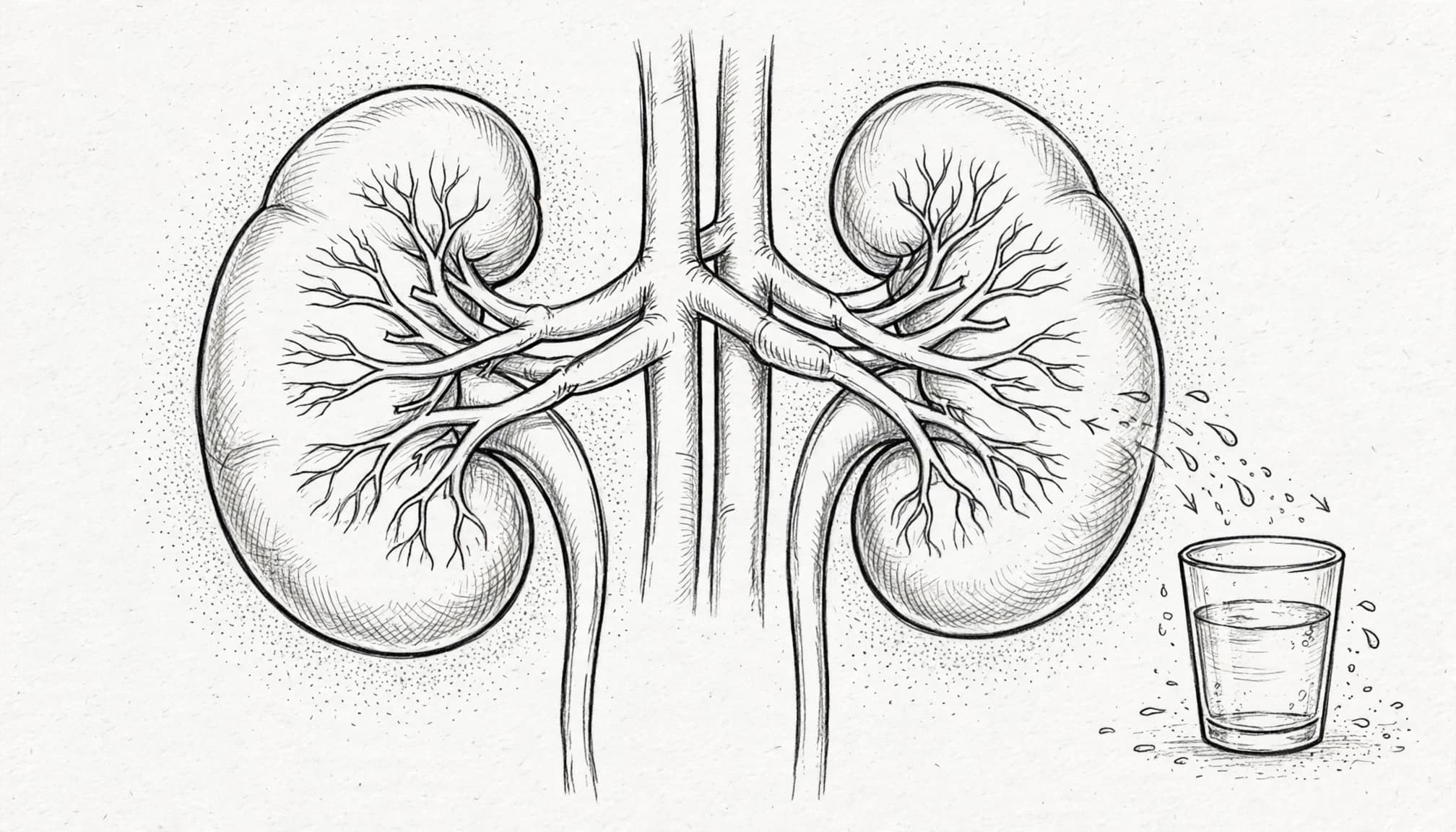
Urea, BUN, creatinine and eGFR
Urea is a waste product from protein breakdown. Blood urea nitrogen (BUN) measures the nitrogen portion of urea. Both can rise during dehydration.
Urea may rise more than creatinine because your kidneys reabsorb more urea while conserving water. Reduced blood flow to the kidneys can also raise creatinine.
Because estimated glomerular filtration rate (eGFR) uses creatinine to estimate kidney filtration, higher creatinine can produce a lower eGFR. This doesn't automatically establish chronic kidney disease.
Our Silver Health Checkup includes urea, BUN, creatinine and eGFR among its kidney markers.
Blood cells, proteins and electrolytes
Haemoglobin and haematocrit, also called hematocrit, can read higher when blood becomes concentrated. It measures the proportion of blood occupied by red blood cells. Albumin and total protein may also rise.
Dehydration can increase sodium, potassium or chloride, although electrolyte changes depend on the cause. For example, vomiting or diarrhoea can also cause electrolyte losses.
Serum osmolality measures the concentration of dissolved particles in blood. The athlete study discussed below lists a normal range of 275 to 295 mOsmol/kgH2O.
Why blood and urine hydration tests differ
Dark urine is a useful prompt to drink, but urine concentration alone doesn't diagnose dehydration.
A study of 318 collegiate athletes compared common sports-medicine thresholds: urine osmolality of at least 700 mOsmol/kgH2O and urine specific gravity of at least 1.020.
These classified 55% and 27% of athletes as dehydrated, respectively. Yet none met the study's blood-based definition, serum sodium above 145 mmol/L. The normal sodium range was 135 to 145 mmol/L.
These definitions measure different things. Urine becomes concentrated as kidneys respond to fluid intake, while the body tightly regulates blood tonicity, the concentration that influences water movement between cells.
The study concerned athletes, not routine patients with abnormal kidney results. Also, normal sodium doesn't rule out clinically important fluid loss.
Concentrated urine and high blood sodium aren't interchangeable findings; interpreting hydration requires symptoms and clinical context.
How to prepare for your blood test
Aim for your usual, well-hydrated state rather than trying to change your results.
Plain water is usually allowed during fasting
NHS blood-test guidance allows water during a fast. Tea, coffee, juice and other drinks don't count as plain water.
Many of our panels require 8 to 12 hours of fasting, although some tests don't require fasting. Follow the preparation instructions supplied with your booking.
Don't stop prescribed medicines unless your clinician instructs you to. If you have a prescribed fluid restriction, follow it rather than increasing water intake yourself.
Keep drinking and activity consistent
Drink normally the day before and the morning of testing. Aim for pale-coloured urine throughout the day rather than drinking a large amount immediately before collection.
Eight 8-ounce glasses, about 1.9 litres, is a common starting point, not a universal requirement. Heat, exercise and medical conditions change fluid needs.
For comparable repeat results, arrange sampling at a similar time of day. Also, avoid strenuous training and heavy alcohol intake for 24 hours beforehand.
What if you're dehydrated on test day?
Tell the nurse before collection if you've had little to drink, heavy sweating, vomiting or diarrhoea. Mention thirst, dizziness and reduced urination too.
If you're mildly thirsty and water is allowed, drink normally. Don't force litres of water or postpone an urgent blood test yourself. For routine testing, the clinician may recommend rescheduling or recording your symptoms alongside the sample.
Seek urgent medical care for confusion, fainting, very little urine or inability to keep fluids down.
Changes caused only by dehydration usually improve after rehydration. However, severe dehydration can injure the kidneys. Your clinician should decide whether and when to repeat abnormal results.
Key takeaways
Normal hydration supports more consistent testing. Water is usually allowed during fasting, while sudden overdrinking isn't helpful.
Raised kidney markers, proteins or haematocrit can reflect dehydration, but the result still needs interpretation alongside your symptoms and previous readings.
Frequently asked questions
Do I need to fast for HbA1c?
No. CDC guidance on HbA1c testing says fasting isn't required for this test alone. HbA1c reflects average blood sugar over roughly two to three months. However, other tests collected alongside it may require fasting.
Does high creatinine always mean kidney disease?
No. Dehydration is one possible cause, and creatinine also varies with muscle mass and other factors. A clinician interprets it alongside previous results and other findings.
Prepare normally and follow up abnormal results
Dehydration can alter blood test results, especially kidney markers and measures affected by blood concentration. Drinking normally before testing helps reduce avoidable variation.
If you're unwell or dehydrated, tell the collection team. An abnormal result deserves appropriate follow-up, even when fluid loss seems a likely explanation.