


Yes, taking a biotin supplement can interfere with some lab tests, altering blood test results and producing misleading readings that may be falsely high or low depending on the laboratory's test method.
This article covers biotin's effects on tests for other substances, not a Biotin Blood Test that measures biotin itself.
This matters if you take hair, skin and nail supplements, multivitamins, or prescribed high-dose biotin. Tell your healthcare team before testing, even if you feel well. Understanding which tests are vulnerable helps you prepare safely.
Key takeaways
-
Biotin affects some laboratory methods, not every blood test.
-
Thyroid tests and certain cardiac troponin tests can give misleading readings.
-
The right pause before testing depends on your dose and the assay, so don't apply one stopping time to every supplement.
How does biotin interfere with a blood test?
Biotin, also called vitamin B7, helps the body process nutrients. Laboratories also use biotin in some laboratory testing systems.
Roche's physician factsheet on biotin addresses interference with immunoassays, tests that use antibodies to measure substances in blood. Some immunoassay methods rely on biotin binding to a protein called streptavidin. Excess biotin in a sample can disrupt that process.
The influence on results depends on assay design, and susceptible methods can produce falsely high or low results. In susceptible "sandwich" assays, excess biotin commonly produces falsely low results. In susceptible "competitive" assays, it commonly produces falsely high results.
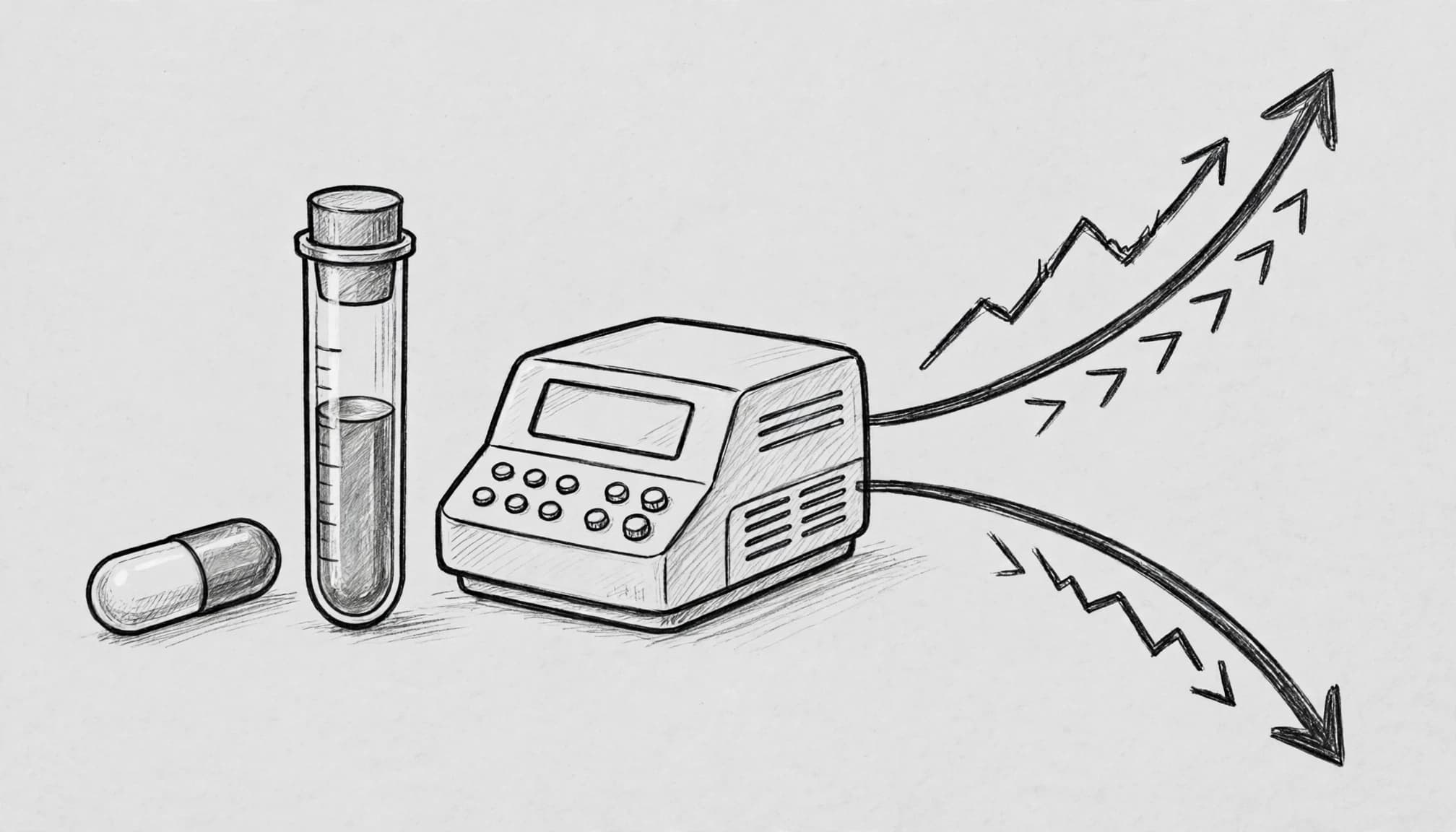
These changes concern the measurement. They don't necessarily mean the amount of hormone or other substance in your body has changed. Different laboratories may use methods with different levels of susceptibility.
Which blood test results can change?
Thyroid tests can suggest an overactive thyroid
In susceptible thyroid assays, biotin can cause falsely low thyroid-stimulating hormone (TSH) and falsely high T3 or T4 results. These assay results can resemble hyperthyroidism, even when the thyroid isn't overactive.
Our thyroid panel with antibody tests includes TSH and thyroid hormone measurements. Share your supplement use before collection so the laboratory can assess whether its methods are vulnerable.
If results don't fit your symptoms or previous readings, your clinician may investigate interference before changing treatment.
Troponin can read falsely low
Troponin is a protein clinicians measure when assessing possible heart muscle injury. The FDA's troponin interference warning explains that biotin can cause falsely low results in certain assays. This can complicate recognition of a heart attack.
Don't delay emergency care to wait for biotin to leave your body. If you develop chest pain or other possible heart attack symptoms, seek urgent help and tell the treating team about biotin immediately. They can account for it when choosing tests and interpreting findings.
How long should you stop biotin before testing?
Timing depends on the dose and assay
The AACC/ADLM guidance on biotin interference recommends waiting at least eight hours after taking 5 to 10 mg before sample collection. Some sensitive assays may require up to 72 hours.
For prescribed doses of 100 mg daily or more, the guidance recommends at least 72 hours when medically appropriate. Don't stop prescribed biotin without your treating clinician's advice.
These intervals aren't guarantees for every test. Ask your healthcare team whether and when to stop biotin before blood test collection, based on your dose and the laboratory method. Label units matter: 5,000 micrograms equals 5 mg.
B-vitamin instructions aren't interchangeable
Biotin is one of the B vitamins, specifically B7. Instructions for B12 or folate, also called B9, address different vitamins and shouldn't determine your biotin pause.
For example, our vitamin B12 and folate test preparation instructions advise avoiding those supplements for 24 hours beforehand. That isn't a universal rule for every B vitamin or blood test.
Also, fasting and avoiding biotin are separate preparation steps. Going without food overnight doesn't automatically prevent biotin interference. Follow the test-specific preparation plan your healthcare team provides.
What should you tell your healthcare team?
If you take biotin before blood test collection, tell the clinician ordering the test, the person collecting your sample, and the laboratory. Share the product name, daily dose, and time of your last dose. A photo of the ingredient label can help if the product contains several vitamins.
Include supplements you don't think of as medicines. Hair and nail products or B-complex tablets may contain biotin alongside other ingredients.
This information helps the team choose suitable testing methods, arrange a pause when appropriate, or interpret unexpected results. If your sample has already been collected, report your biotin use before anyone makes treatment decisions based on unexpected lab test results.
Frequently asked questions
Can biotin affect estrogen levels?
Biotin can interfere with certain estradiol assays. Estradiol is a form of estrogen, and susceptible competitive tests may report falsely high concentrations.
However, an inaccurate estradiol reading doesn't establish that biotin increased estrogen production in your body. The laboratory method matters. Tell your clinician about biotin before hormone testing, particularly when results will guide treatment.
What are the signs of too much biotin?
There's no reliable symptom pattern, and noticeable biotin side effects won't tell you whether assay interference is occurring. You may feel well despite a misleading reading.
Studies haven't established a clear toxicity syndrome from high biotin intake. However, this doesn't make every dose appropriate or remove the laboratory risk. Your supplement label and dosing history are more useful than symptoms for identifying possible interference.
Make biotin part of your test preparation
Biotin can distort selected laboratory results in opposite directions. The test method and your dose determine the risk, so a single stopping rule won't suit everyone.
Before your blood draw, share the supplement label and your last dose with your healthcare team. For urgent symptoms, seek care immediately and disclose biotin use rather than postponing assessment.