


Yes, alcohol can affect blood test results, especially liver enzymes, triglycerides and glucose. The effect depends on timing, how much you drink and which tests you're having.
Drinking the night before doesn't automatically make every result unusable. However, routine panels and alcohol-specific tests answer different questions, so preparation starts with understanding your test.
Key takeaways
-
Alcohol can change laboratory readings after its intoxicating effects fade.
-
Tell your clinician what you drank and when, rather than cancelling an urgent test yourself.
How alcohol affects routine blood tests
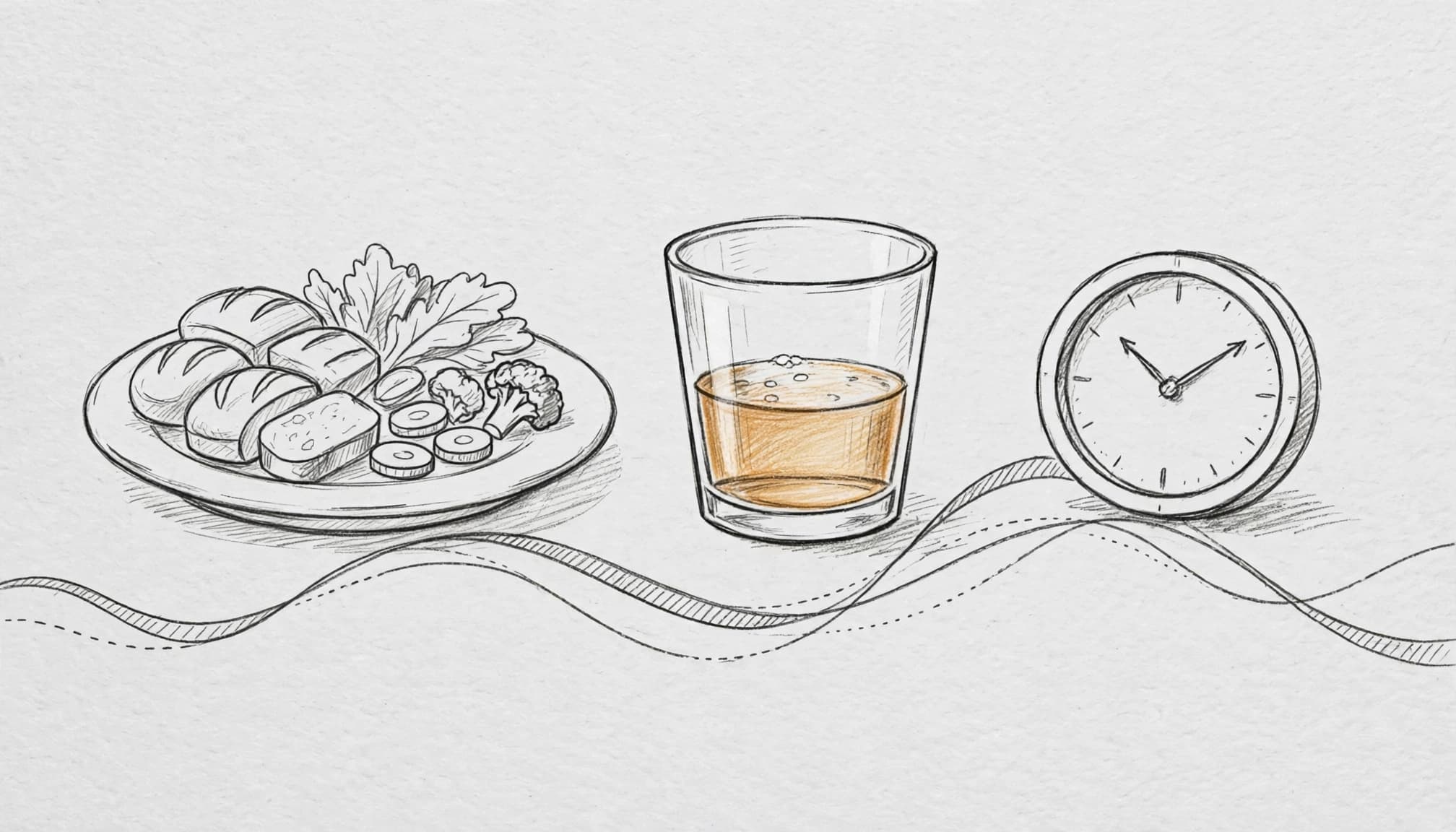
Liver enzymes and triglycerides
A liver function test may measure ALT, AST and GGT, enzymes clinicians use to assess liver health. Reports may label ALT as SGPT and AST as SGOT. Raised levels can also have causes unrelated to drinking.
After sustained heavy drinking, GGT can remain elevated for weeks. The Private GP's clinical guide describes two to three weeks, although recovery varies.
Alcohol can also raise triglycerides, a type of blood fat, within hours. A fasting cholesterol panel may show levels above your usual baseline.
A full blood count may show elevated MCV after sustained heavy alcohol use, but this isn't expected after one evening's drinking. C-reactive protein and uric acid results may also be worth discussing with your clinician; neither test directly measures alcohol.
Glucose and longer-term blood sugar
Alcohol can affect blood glucose, especially during fasting or when you use insulin or certain diabetes medicines. It can lower glucose by interfering with the liver's release of stored sugar. Sugary mixers may initially raise glucose.
By contrast, HbA1c reflects average blood sugar over two to three months. One evening's drinking generally won't change it meaningfully.
Our diabetes blood test package includes fasting glucose, lipids and liver markers, so preparation matters across several measurements.
How long should you avoid alcohol before testing?
The Private GP's preparation guide recommends avoiding alcohol for at least 24 hours before most blood tests and 48 hours before liver enzyme or lipid panels. These are preparation guidelines, not guarantees that every marker returns to baseline.
For a fasting test, follow the prescribed interval, commonly eight to 12 hours, and drink only plain water. Alcohol breaks the fast. Some cholesterol panels don't require fasting, but drinking can still affect triglycerides.
Differences in alcohol absorption and metabolism help explain why the same amount can affect people differently, as alcohol metabolism varies.
The guide gives roughly 12 to 24 hours for alcohol to clear the bloodstream, depending on intake. Heavy drinking can take longer, while changes in liver markers may persist after ethanol disappears.
If you're alcohol-dependent, seek medical advice before stopping suddenly because withdrawal can be dangerous.
What to do if you drank before a blood test
Tell the clinician or laboratory before collection. Give the approximate amount, the time of your last drink and whether you followed the fasting instructions.
This information helps them decide whether to proceed, postpone a non-urgent test or interpret the result with that context. It can also prevent a temporary change from prompting an unnecessary investigation.
Don't delay urgent testing because you've been drinking. If the sample has already been collected, tell the clinician reviewing it. Don't try to compensate with excessive water, extra fasting or changes to prescribed medicines.
Understanding blood alcohol test results
Blood sampling and breath estimates
A blood alcohol test measures ethanol directly. A health professional collects a blood sample from your arm with a needle; minor bruising is a common risk.
A breath alcohol test estimates blood concentration from exhaled breath. The University of Toledo describes a conventional blood-to-breath concentration ratio of 2,100:1.
For the chemical balloon test, one green band indicates 0.05% or less; two indicate 0.05% to 0.10%; three indicate 0.10% to 0.15%. These bands don't apply to every breath-testing device.
Reading the BAC number
A blood alcohol level is reported as blood alcohol concentration (BAC), also called blood alcohol content. A normal result is zero; detected alcohol is an abnormal finding.
These BAC percentages describe possible effects, not reliable personal predictions.
<table><thead><tr><th>BAC</th><th>Possible effects</th></tr></thead><tbody><tr><td>0.02%</td><td>Relaxation and slight body warmth</td></tr><tr><td>0.05%</td><td>Sedation and slower reactions</td></tr><tr><td>0.10%</td><td>Slurred speech and poor coordination</td></tr><tr><td>0.20%</td><td>Difficulty walking, nausea and vomiting</td></tr><tr><td>0.30%</td><td>Loss of consciousness</td></tr><tr><td>0.40%</td><td>Coma and possible death</td></tr><tr><td>0.50% or higher</td><td>Extreme risk of death</td></tr></tbody></table>Severe poisoning can occur below these thresholds. Call emergency services if someone is difficult to wake or breathes slowly.
Alcohol often peaks about an hour after drinking, although food can delay the peak. Body weight and drinks per hour affect BAC. Women generally reach higher concentrations than men after comparable intake.
Legal BAC limits don't define safe driving
Most US states set the adult driving threshold at 0.08% BAC for people aged 21 or older. Under-21 limits may be 0.02% or lower.
In Canada, the federal criminal threshold is 0.08%. Most provinces impose consequences beginning at 0.05%, while novice or not-fully-licensed drivers face lower limits. Whether someone is legally drunk depends on the jurisdiction and its legal limit.
Intoxication can affect reaction time and cause impaired judgment below a legal threshold. A breath result doesn't establish driving ability. Don't use these numbers to decide whether to drive.
Frequently asked questions
Does a routine blood panel measure alcohol?
Usually, no. Measuring ethanol requires an alcohol-specific test. Liver enzymes and triglycerides don't directly measure blood alcohol concentration.
Can abnormal liver enzymes diagnose alcohol dependence?
No. Clinicians assess drinking history and symptoms alongside laboratory findings. Raised liver enzymes alone don't establish alcohol dependence.
Give your clinician the full picture
Alcohol can affect both short-term readings and longer-lasting markers. Honest preparation information helps your clinician interpret those changes.
Follow your test's fasting instructions and disclose any drinking before collection. If you've already had alcohol, let the clinical team decide the next step rather than assuming the test is ruined.