


When reading a lab report, check the test name, units, reference range and related findings before interpreting a flag. An "H" or "L" means the value falls outside that lab's range, but it doesn't establish a diagnosis.
The useful question is what the result means in your clinical context, including symptoms, medications and previous tests. Start with the report's structure, then look at how the numbers fit together.
Key takeaways
-
Compare each value with the reference range printed on your own report.
-
Reference ranges describe a population; diagnostic cutoffs and treatment targets answer different questions.
-
Ask your clinician about unexpected findings, and seek urgent care for severe or rapidly worsening symptoms.
Reference ranges aren't diagnostic cutoffs
What a reference range describes
A normal range (reference interval) describes results from a large group of apparently healthy people. It isn't a diagnostic cutoff. Many ranges cover the middle 95% of that population, so about 5% of healthy people fall outside them.
That statistical definition of reference intervals helps explain why one flagged value doesn't automatically mean disease. Larger panels also create more opportunities for an incidental flag.
Laboratories use different methods, equipment and comparison populations. Age, sex and pregnancy can affect the applicable range. Always use the interval printed beside your result.
Why a cutoff means something different
A diagnostic cutoff is a threshold used to identify a condition. A treatment target is a goal based on evidence and individual risk.
Neither necessarily matches a laboratory's reference interval. Cholesterol is a common example: a person's recommended LDL target can be lower than the report's general limit.
A value crossing the reference boundary by a small amount doesn't create a sudden change from healthy to ill.
How to read your blood test results
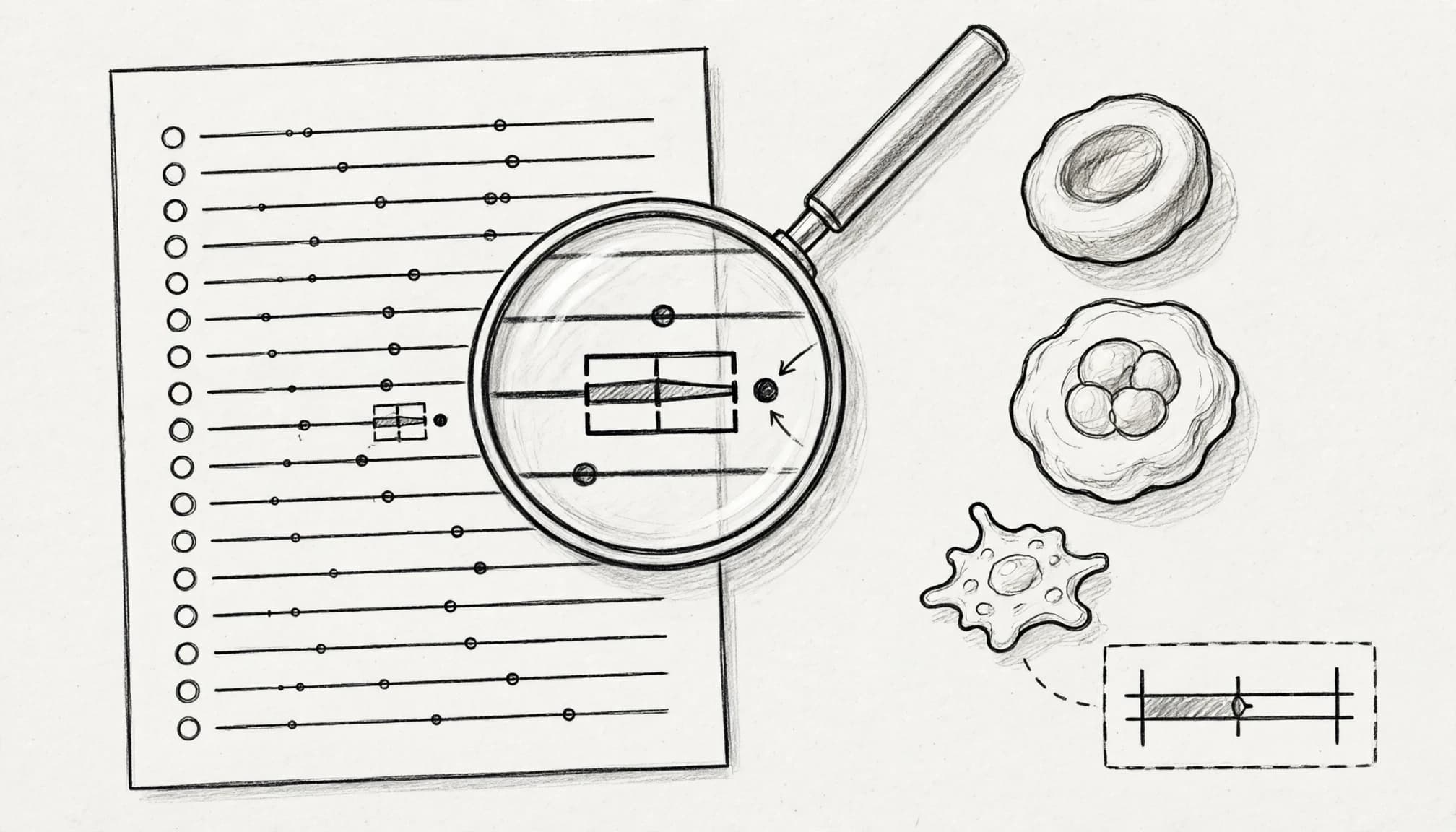
Read the whole row, including units
For each lab test, find the test name, measured value, unit, reference interval and laboratory comments. Check the collection date too.
Units matter. Reports may use mg/dL, mmol/L, ng/mL or pg/mL. A glucose number in mmol/L can't be compared directly with one in mg/dL. Conversion factors depend on the substance being measured.
When comparing laboratories, match both the units and methods. MedlinePlus guidance on lab results explains why values from different laboratories aren't always directly comparable.
Understand flags and result words
"H" and "L" identify abnormal results relative to the lab's reference interval. They don't indicate urgency by themselves.
For tests looking for a substance, antibody or organism, negative means it wasn't detected. Positive means it was detected. Inconclusive means the answer was unclear, and repeat testing is often needed.
A false positive or false negative can occur. A normal numerical result also doesn't rule out every possible cause of symptoms.
What a complete blood count tells you
A complete blood count, or CBC, measures red blood cells, white blood cells and platelets.
Red blood cells and anemia markers
Hemoglobin carries oxygen. Hematocrit measures the proportion of blood occupied by red cells. MCV describes average red-cell size, while RDW describes variation in size.
Low hemoglobin can indicate anemia, but the cause needs investigation. MCV, ferritin, iron studies and vitamin B12 can help distinguish possible explanations.
Ferritin reflects iron stores, although inflammation can raise it. A ferritin result therefore needs context rather than interpretation as an isolated "iron score."
White blood cells and platelets
Typical adult ranges are 4,000 to 11,000 cells/uL for white blood cells and 150,000 to 400,000 cells/uL for platelets.
White cells support immune responses; platelets help blood clot. High white counts can accompany infection, inflammation or medication effects. Low counts and abnormal platelets have several possible causes.
Illustrative adult white-cell proportions are neutrophils 40% to 60%, lymphocytes 20% to 40%, monocytes 2% to 8%, eosinophils 1% to 4%, and basophils 0.5% to 1%. Laboratories vary. Absolute counts often provide more useful information than percentages alone.
Metabolic panels: glucose, kidneys and liver
A basic metabolic panel contains eight measurements. A comprehensive metabolic panel usually contains 14, adding liver-related measurements and proteins.
These adult intervals illustrate common reporting, not universal diagnostic limits.
<table><thead><tr><th>Test</th><th>Typical adult interval</th><th>What it helps assess</th></tr></thead><tbody><tr><td>Fasting glucose</td><td>About 70 to 100 mg/dL</td><td>Blood sugar</td></tr><tr><td>Sodium</td><td>136 to 145 mEq/L</td><td>Fluid and electrolyte balance</td></tr><tr><td>Potassium</td><td>3.5 to 5.0 mEq/L</td><td>Nerve, muscle and heart function</td></tr><tr><td>BUN</td><td>7 to 20 mg/dL</td><td>Waste handling and hydration</td></tr><tr><td>Creatinine</td><td>0.7 to 1.3 mg/dL</td><td>Kidney filtration, alongside eGFR</td></tr></tbody></table>The interpretation depends on the pattern. High BUN can accompany dehydration; elevated creatinine can reflect reduced filtration but is also influenced by muscle mass. Sodium and potassium are electrolytes, and high or low results need assessment in context.
Fasting blood glucose, also called fasting blood sugar, shows why reference intervals and diagnostic thresholds differ. Common criteria classify 100 to 125 mg/dL as prediabetes. A fasting value of 126 mg/dL or above can meet a diabetes criterion, usually requiring confirmation when clear symptoms aren't present.
HbA1c provides a different view, reflecting average glucose over roughly two to three months.
The panel's liver-related measurements contribute to assessing liver function. ALT and AST are enzymes that can rise with liver injury, although AST also comes from muscle. Alkaline phosphatase, bilirubin and albumin add context. One raised enzyme doesn't identify the cause.
Thyroid and cholesterol results need different context
Read TSH alongside thyroid hormones
TSH is a common thyroid test, with a typical reference range of 0.4 to 4.0 mIU/L. Laboratory ranges vary, including during pregnancy.
High TSH with low free T4 can suggest hypothyroidism, an underactive thyroid. Low TSH with high free T4 can suggest hyperthyroidism, an overactive thyroid.
A mildly abnormal TSH with normal free T4 needs a different assessment. Medications, illness and supplements such as biotin can affect interpretation or interfere with testing.
Treat cholesterol targets as risk-based goals
A lipid panel measures total cholesterol, HDL, LDL and triglycerides. Higher LDL cholesterol generally increases cardiovascular risk, while triglycerides provide additional information.
The total cholesterol-to-HDL ratio is calculated by dividing total cholesterol by HDL, using matching units. Higher ratios can indicate greater heart disease risk, but the ratio doesn't replace LDL, non-HDL cholesterol or an overall risk assessment.
Our Silver health checkup includes lipid, kidney, liver and iron measurements. Reading these groups together gives more context than counting individual flags.
Compare trends and preparation before drawing conclusions
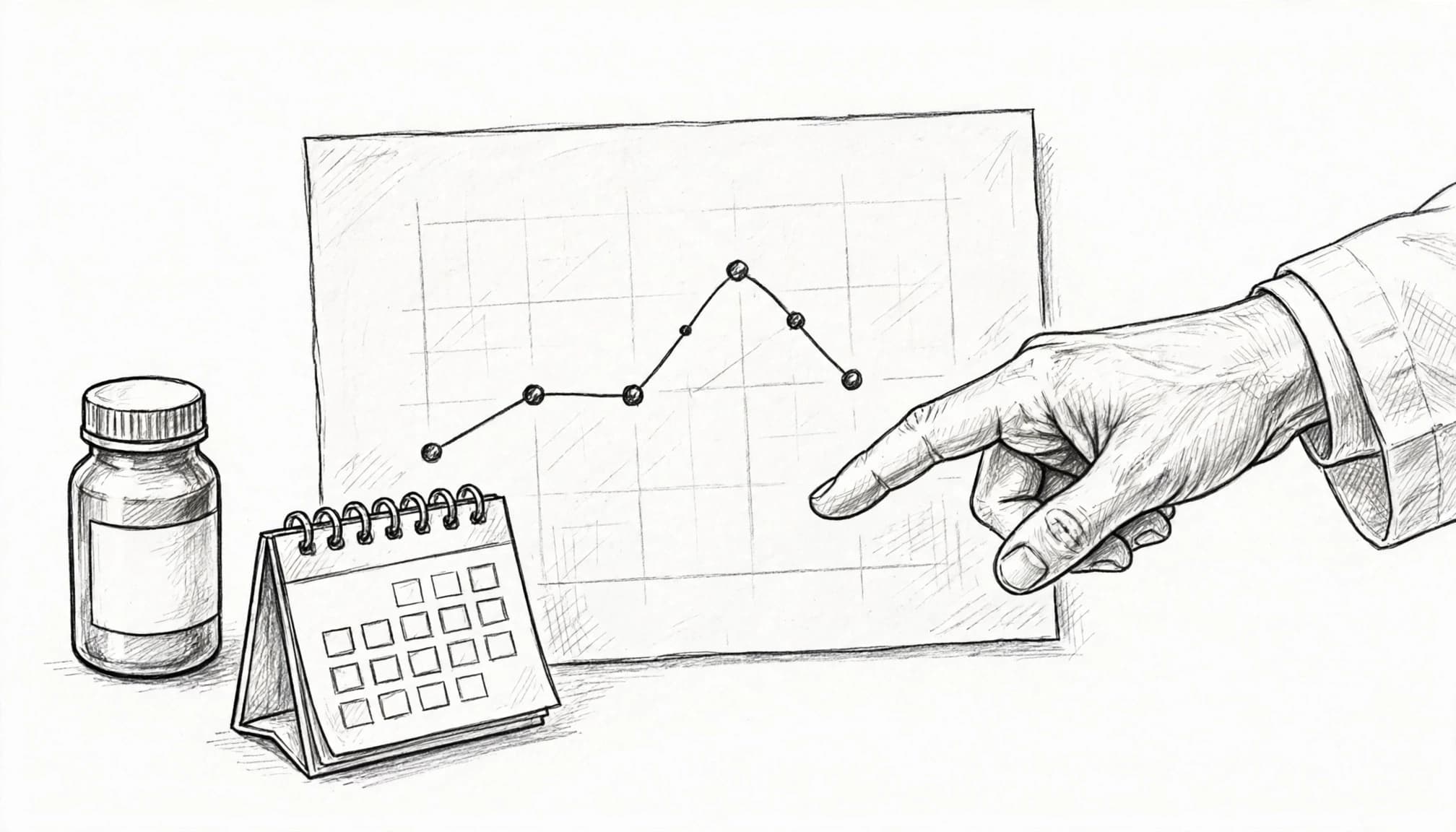
Blood tests are snapshots. Food, drink, medicines, supplements, hard exercise and menstrual periods can affect particular measurements. Hormone results such as FSH, LH, estradiol and progesterone also depend on menstrual-cycle timing.
A six-hour fast may be insufficient for fasting glucose testing. Standard diagnostic testing generally requires at least eight hours without calories. Plain water is usually allowed. Follow the preparation instructions provided, and don't stop prescribed medicines unless instructed.
Compare previous results using the same units, ideally from the same laboratory. Note illness, hydration changes and medication changes around each collection.
A steady trend may matter more than a single borderline reading. A substantial change can also deserve attention even when both values remain inside the reference interval.
Your clinician combines that pattern with symptoms, physical examination, medical and family history, other tests and imaging when needed.
When to contact your clinician or seek urgent care
Ask your doctor about an unexpected result, especially when several related markers are abnormal or symptoms persist. Follow-up may include reviewing medications, repeating a test or investigating a particular pattern.
Useful questions include: "How far outside the range is this?" and "Does it fit my symptoms or previous results?" Also ask whether follow-up is needed and when.
A critical result is different from a routine high or low flag. If the laboratory or clinician contacts you about a critical value, follow their urgent instructions even if you feel well.
Seek urgent care for severe or rapidly worsening symptoms, including chest pain, severe breathlessness, fainting, new confusion or uncontrolled bleeding. Don't wait for a portal update or a routine appointment.
Avoid starting supplements or changing treatment solely to move a flagged number into range.
Frequently asked questions
Can normal blood test results rule out illness?
No. Routine panels test selected aspects of health, and some conditions don't change those measurements. Timing can also affect what a test detects.
Persistent symptoms still deserve assessment. A normal report should inform that assessment rather than end it automatically. Conversely, a positive screening result may need a confirmatory test before a diagnosis is made.
How can I view NHS results online?
In England, NHS online test-result access requires registration with a GP surgery and age 16 or over. Results can be viewed through the NHS App or online GP record.
The record includes GP tests and hospital results sent to the surgery. Hospital results that weren't sent may be absent. Results from before 2023 may need to be requested from the surgery and can take a few weeks to appear.
Use the report to guide a better conversation
The most useful interpretation connects the number with its units, related findings and your health history. A reference interval provides context, while symptoms and clinical assessment determine what needs attention.
Bring unexpected findings and previous reports to your clinician. The goal is to understand whether a result needs follow-up, rather than treating every flag as a diagnosis.